The Octri Blog
News, guides & deep-dives
Product updates and practical writing on API documentation, SDKs, and developer experience.
Guides5 min read
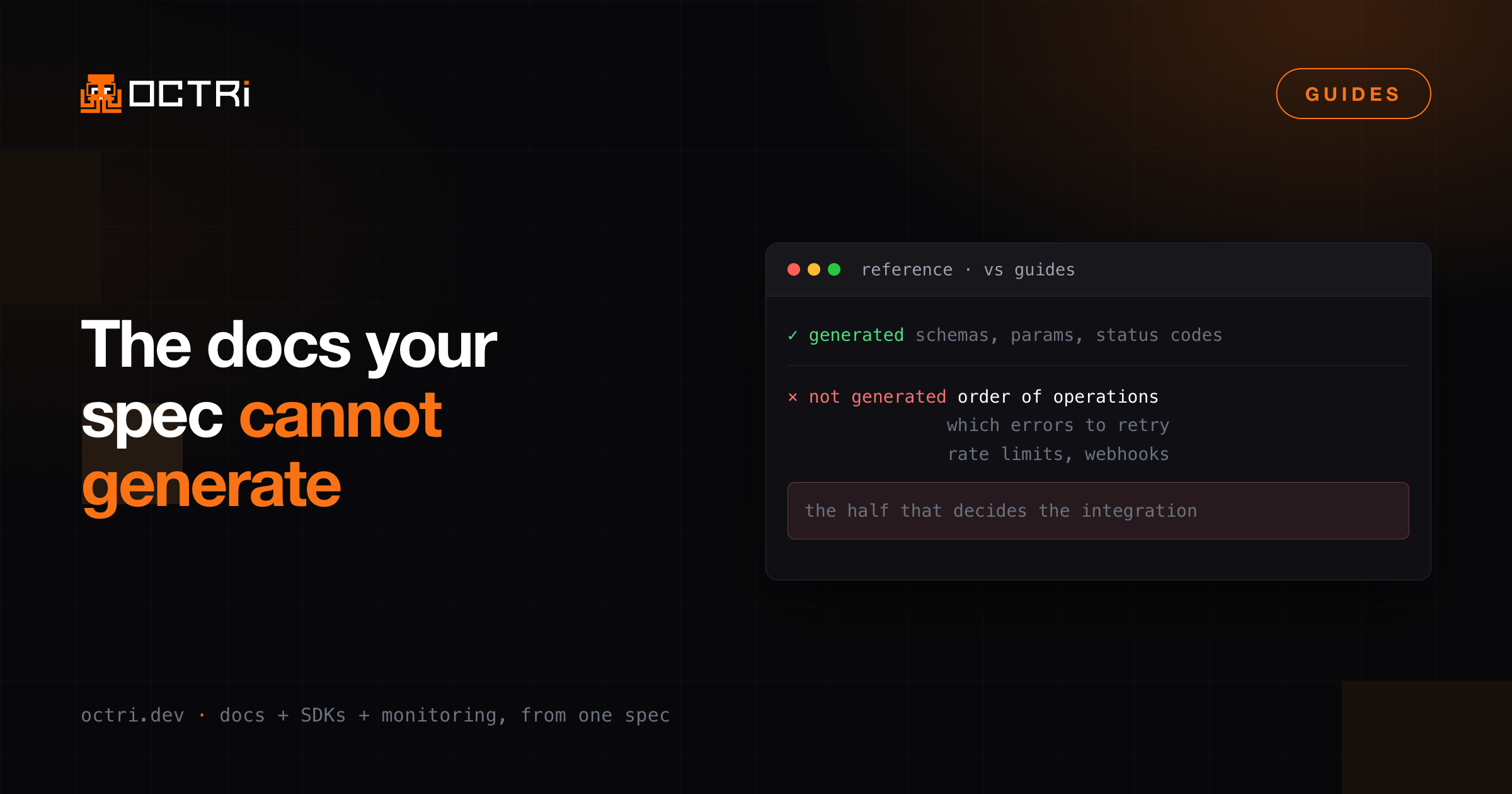
The API docs your OpenAPI spec cannot generate
A generated reference answers what an endpoint accepts. It never answers which endpoint to call, in what order, or what to do when one fails. That part is yours.
Engineering5 min read
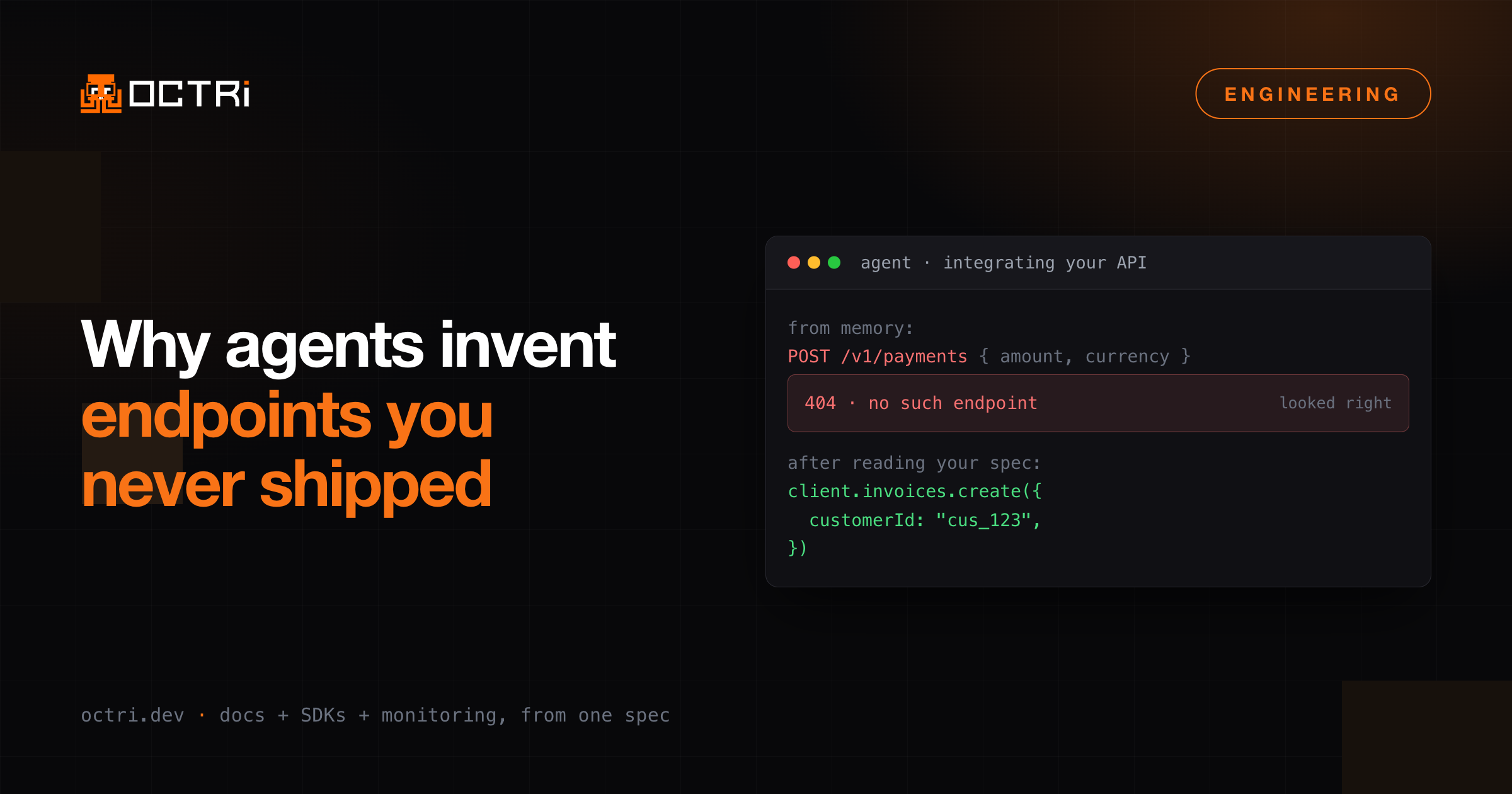
Why coding agents invent endpoints you never shipped
An agent asked to integrate your API will recite one it saw in training or guess from the name. Both produce code that looks right and does not run. The fix is not a better prompt.
Engineering5 min read
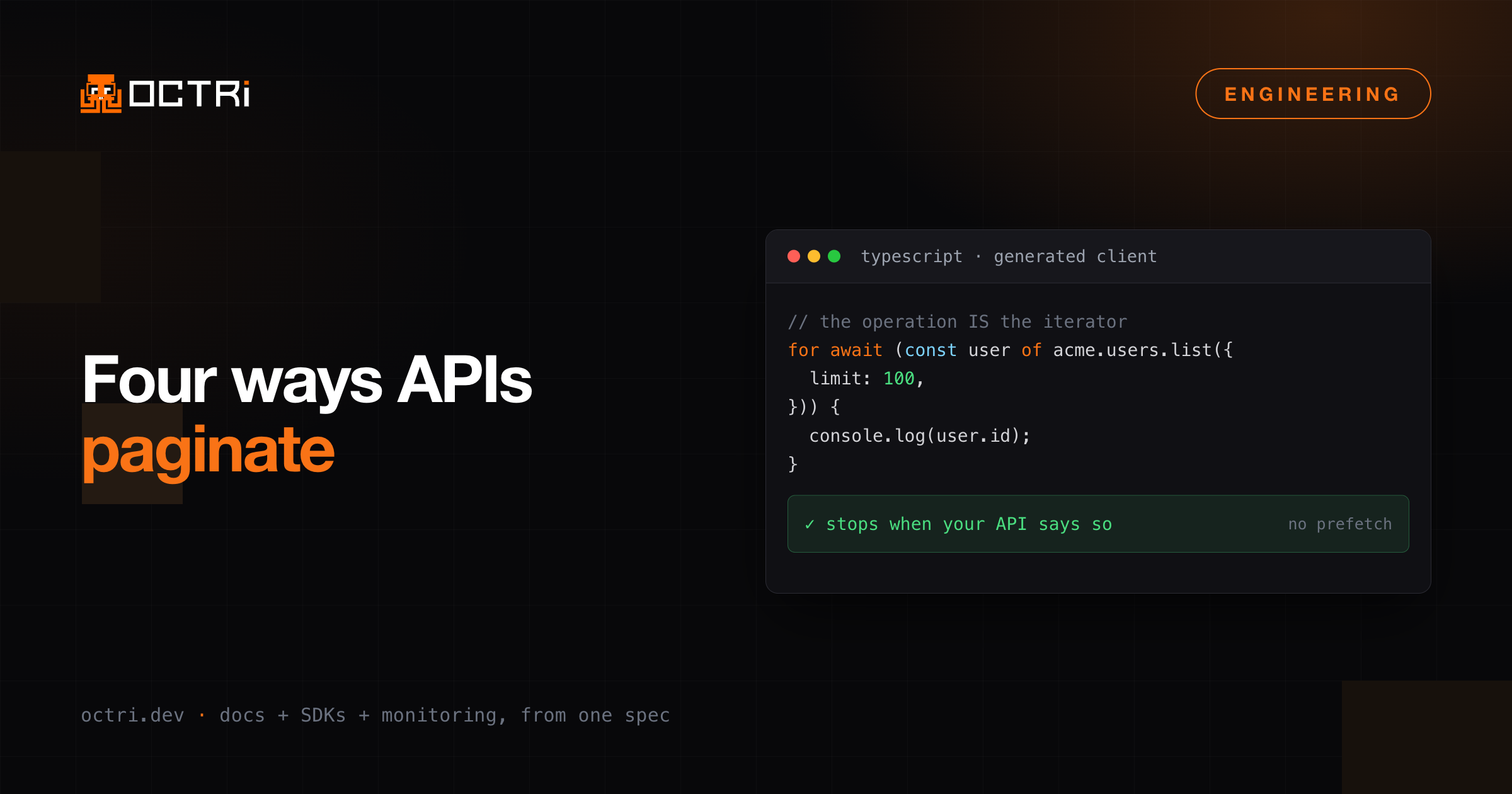
Four ways APIs paginate, and what each one does to your SDK
Cursor, offset, page number, next URL. Your choice decides whether your users write a loop or you write it for them, and whether the loop is even correct.
Product3 min read
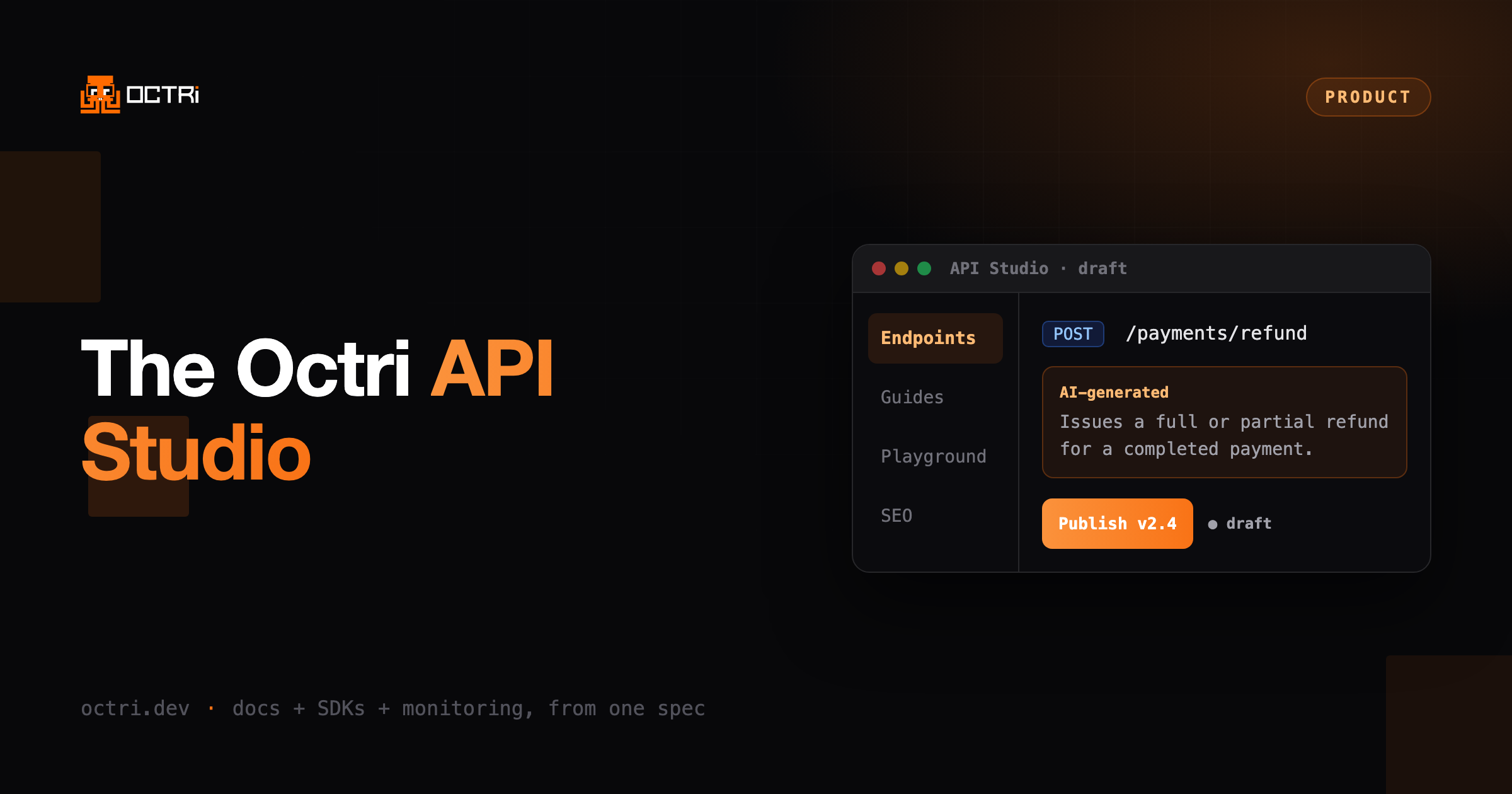
Inside Octri API Studio: Docs You Edit Like an App, Not a Repo
API Studio is a three-pane visual workspace for your docs. Edit an endpoint, watch the page render beside it, drag pages into groups, tune the playground and SEO, and publish a version. No markdown-in-a-repo ceremony.
Product3 min read
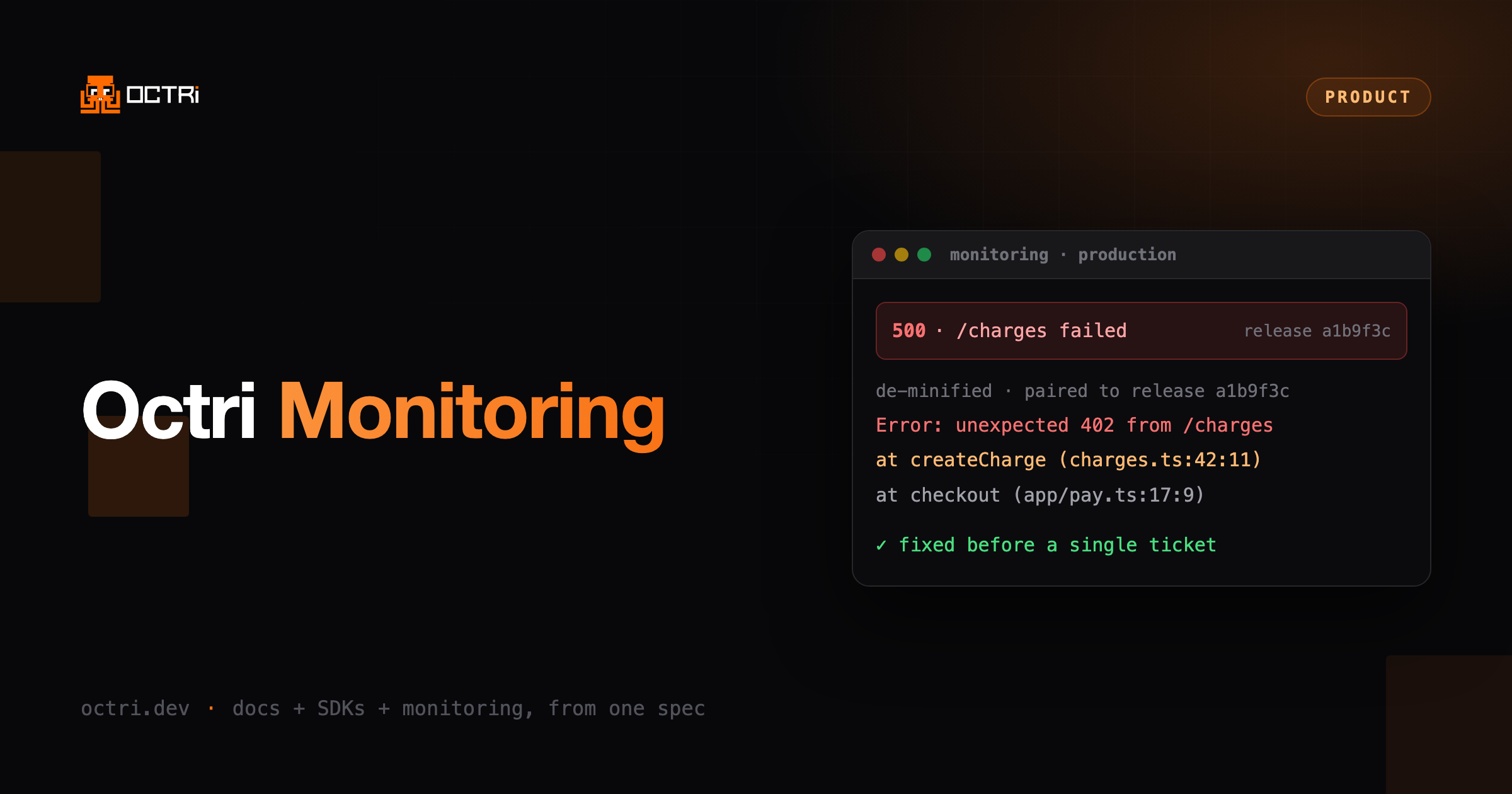
Inside Octri Monitoring: Observability for the SDKs You Ship
The SDKs you hand to other developers are the least-observed code you ship. Octri Monitoring watches them: de-minified stack traces tagged to a release, grouped issues, traces, performance, alerts, and a live tail. Included on every plan.
Product3 min read
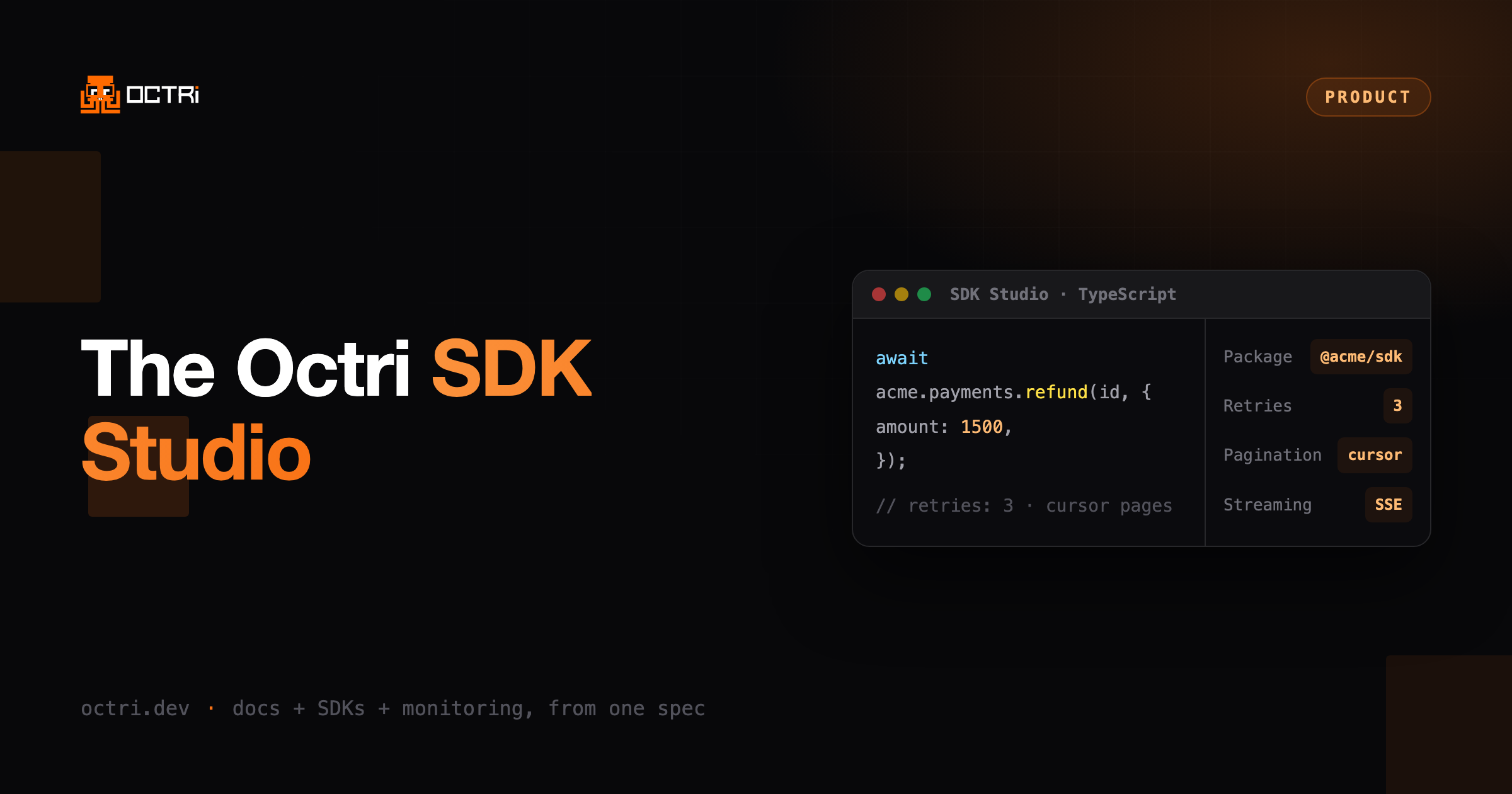
Inside Octri SDK Studio: Tune Every SDK, See the Code Change Live
SDK Studio turns every knob on your generated SDKs in a real UI, per endpoint, with a live preview of the code as you change it. Package names, retries, pagination, streaming, deprecations, auth, custom transforms, and which endpoints ship.
Comparisons4 min read
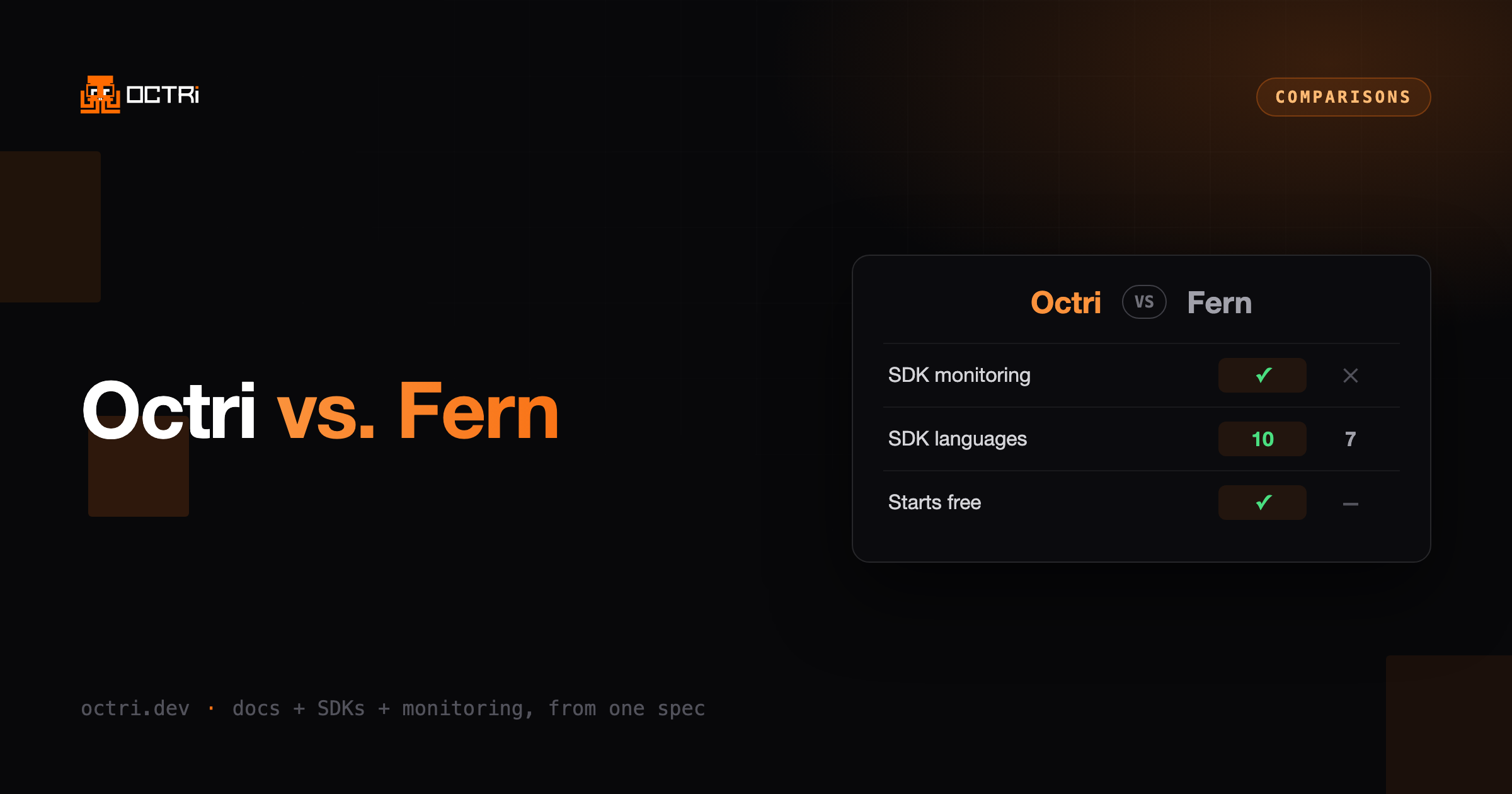
Octri vs. Fern: Docs & SDK Generation Compared (2026)
Fern and Octri both turn one API definition into docs and SDKs. Octri adds production monitoring Fern has no answer for, more languages including Rust, a nicer docs editor, and a free tier.
Comparisons4 min read
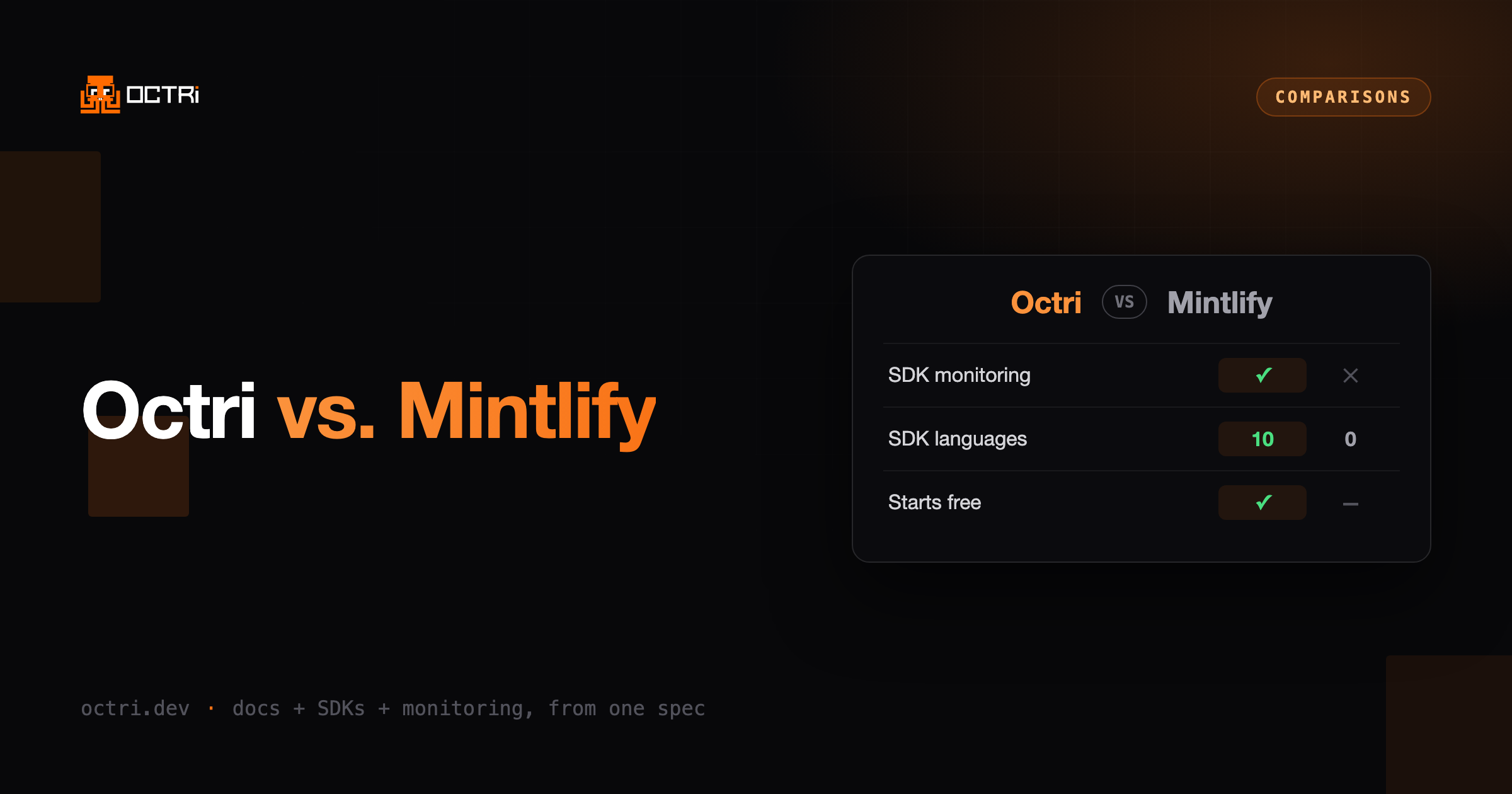
Octri vs. Mintlify: Docs Platform vs. Docs + SDKs (2026)
Mintlify makes a docs site and stops there. It cannot generate a single SDK. Octri gives you docs that look just as good, plus first-party SDKs in 10 languages and production monitoring, from one OpenAPI spec.
Engineering4 min read
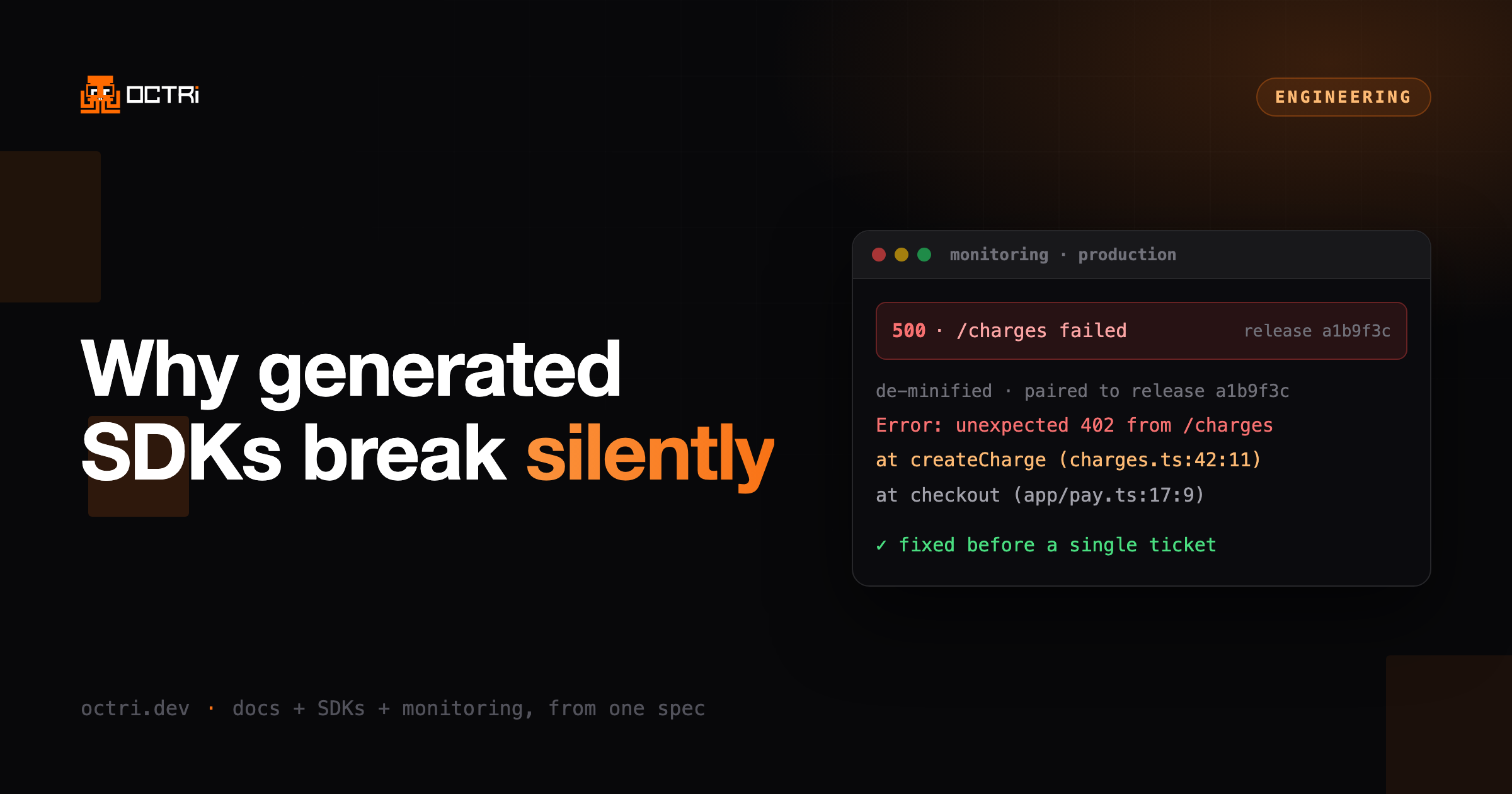
Why generated SDKs break silently, and how to make them observable
Generated SDKs go dark the moment they ship. Here's why they fail silently in production, and the three pieces you need to de-minify their stack traces and see the failures.
Comparisons3 min read
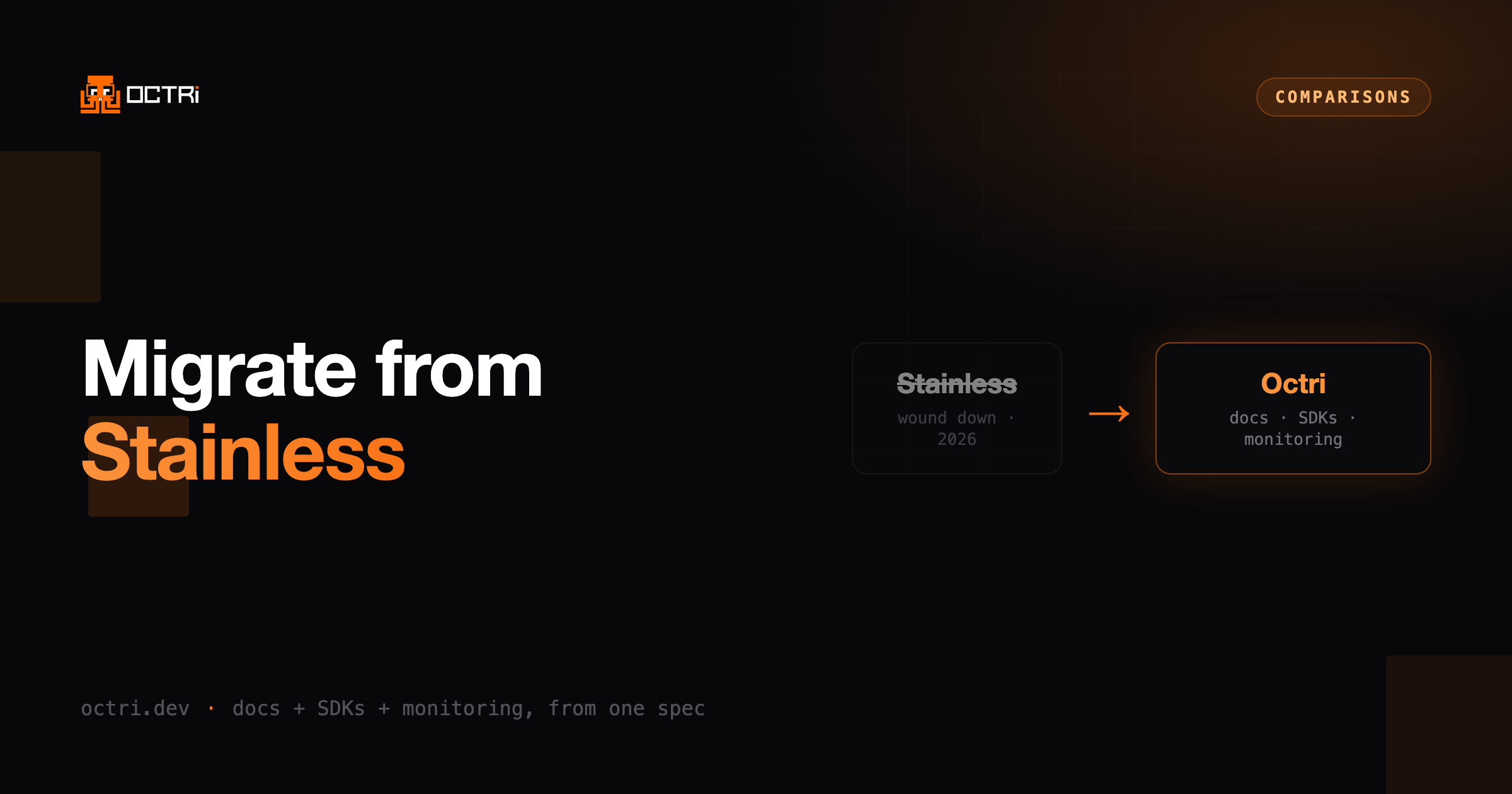
Stainless Alternative: Migrate Your OpenAPI SDKs to Octri
Move a Stainless OpenAPI project to Octri: import your spec and stainless.yml, then review language, package, repository and endpoint settings.
Guides6 min read
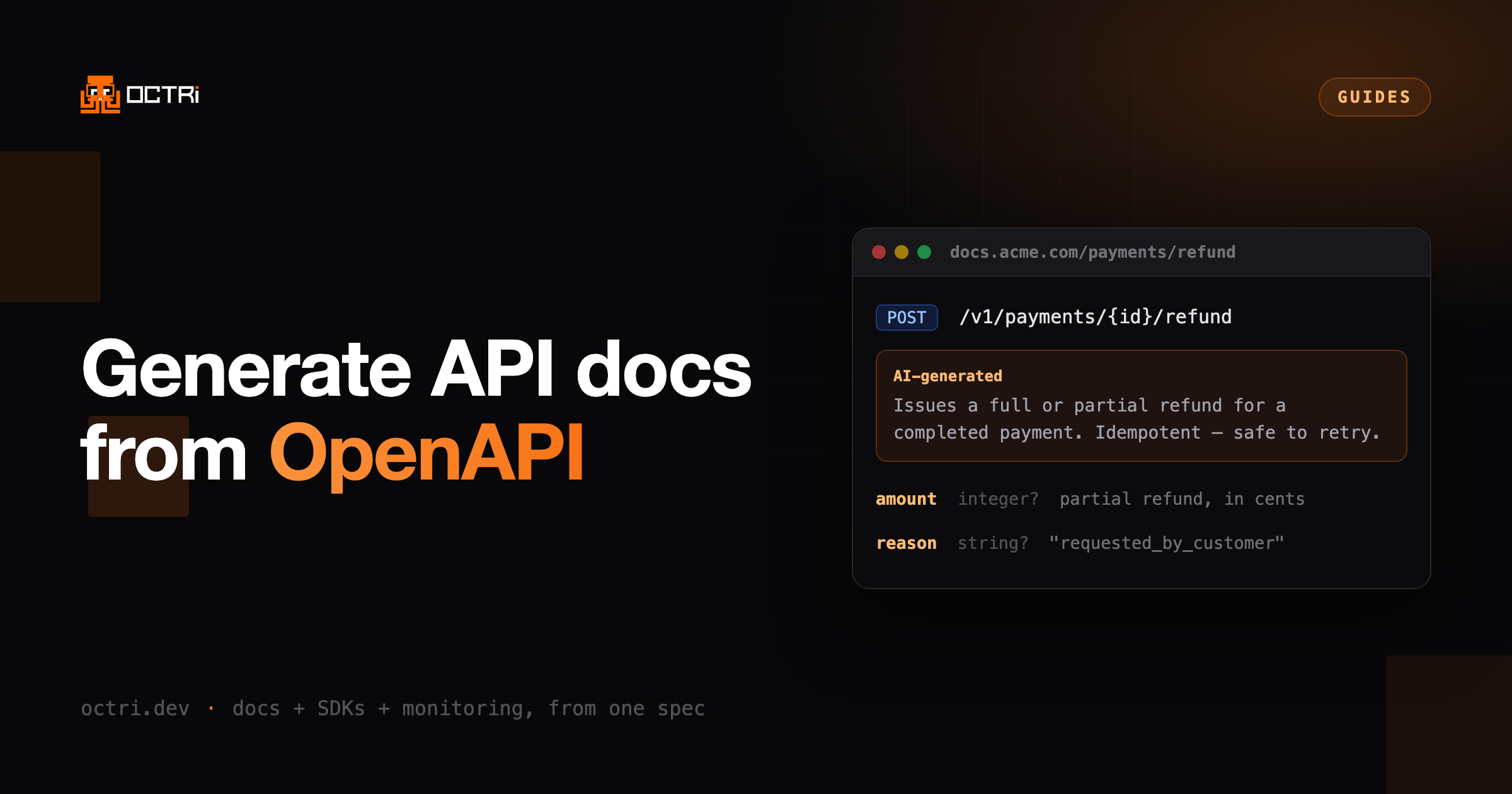
How to Generate API Documentation from an OpenAPI Spec (2026 Guide)
How to generate API documentation from an OpenAPI specification, and how to keep it in sync so it stops drifting from your code.
Guides1 min read
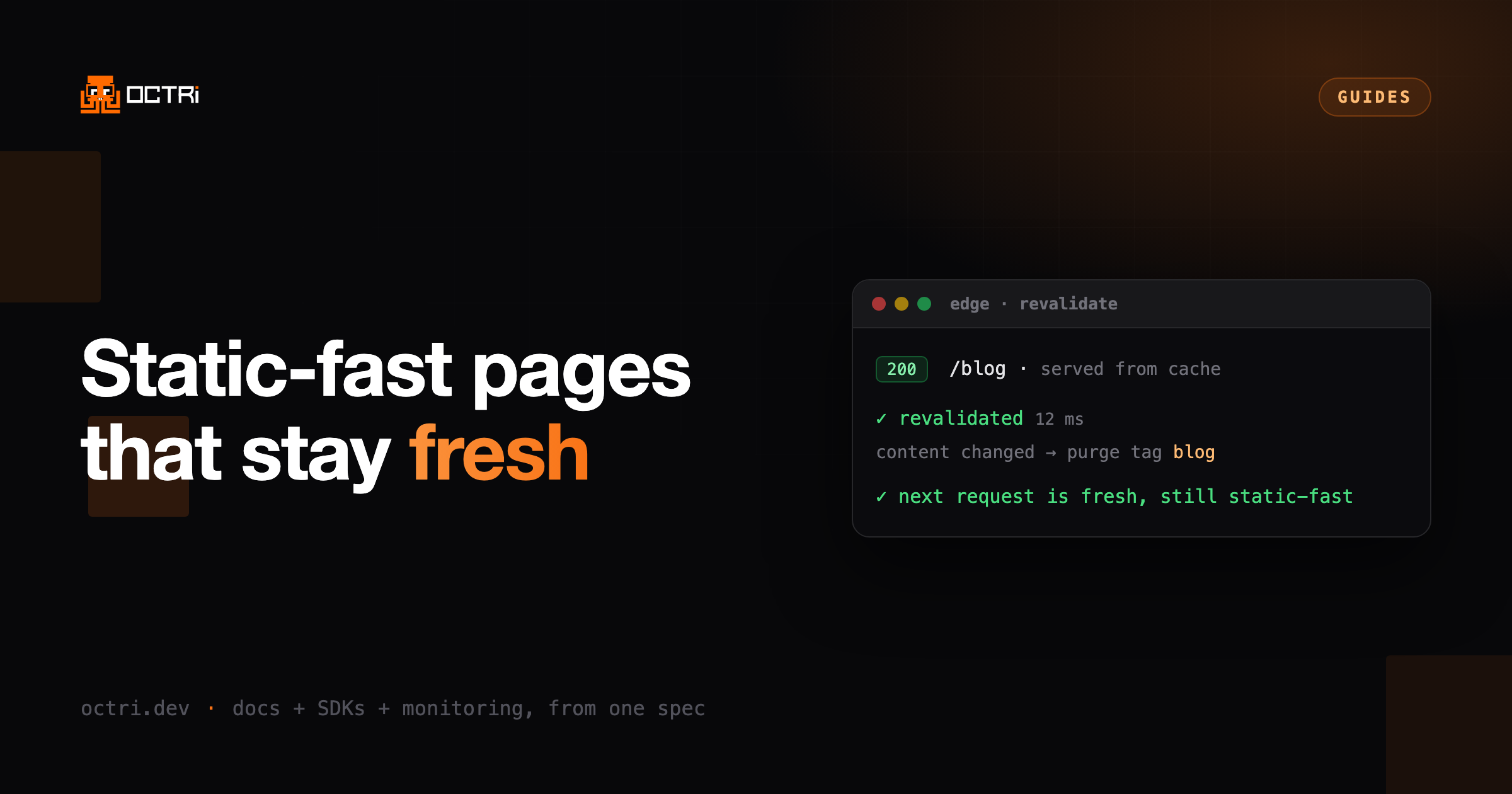
How Octri Keeps Static Pages Fresh with ISR
A look at how incremental static regeneration and on-demand revalidation give you static-fast pages that update the moment your content changes.
Engineering2 min read
Ten Habits for Writing Great OpenAPI Specs
Small, consistent choices in your OpenAPI document produce dramatically better generated docs and SDKs. Here are ten that pay off.
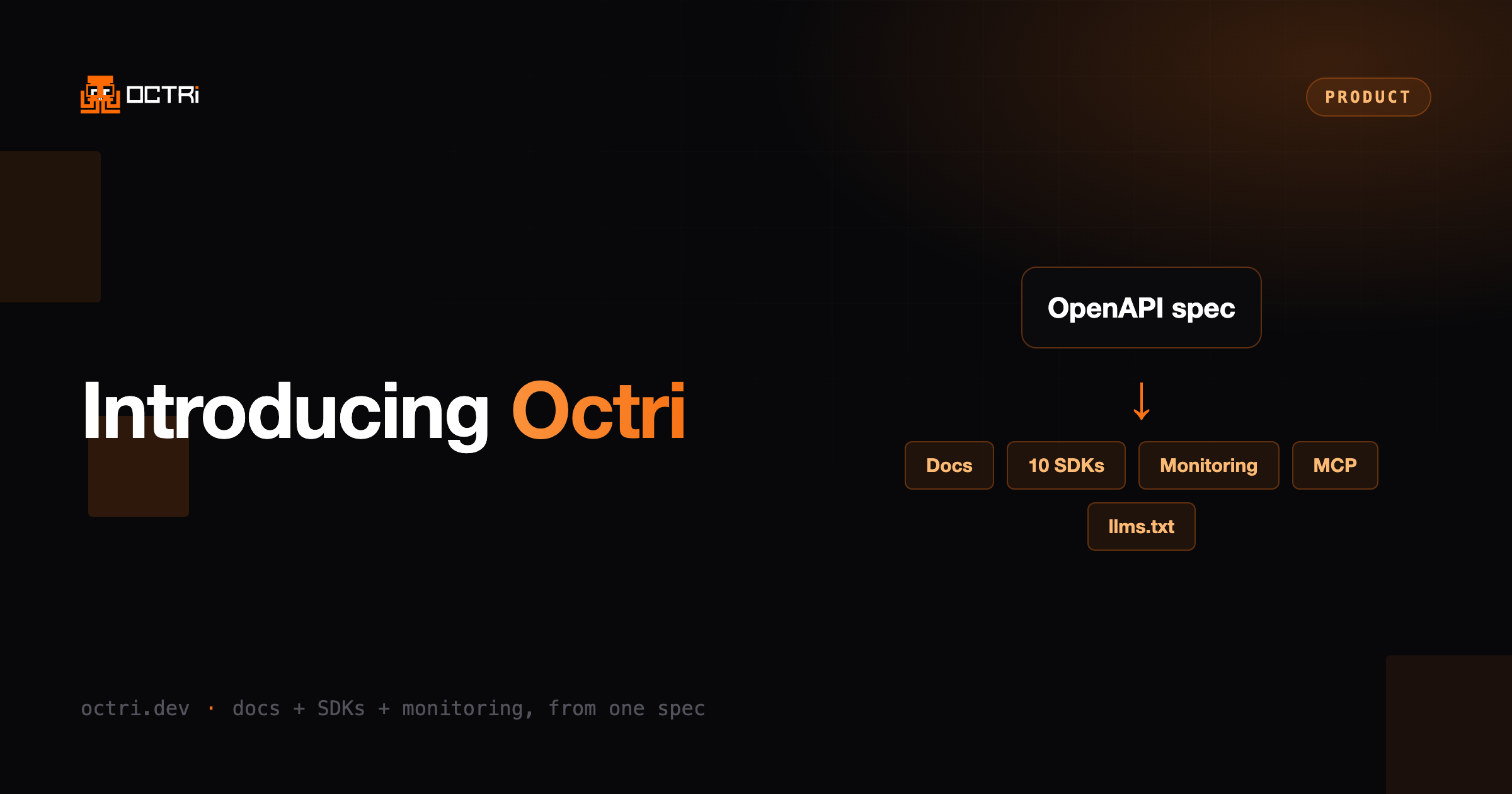
Product2 min read
Introducing Octri: API Docs and SDKs, Automatically
Upload an OpenAPI spec and get complete documentation plus production-ready SDKs in ten languages, updated on every push.