The Octri Blog
News, guides & deep-dives
Product updates and practical writing on API documentation, SDKs, and developer experience.
Guides4 min read
How to Choose an OpenAPI SDK Generator: 10 Questions to Ask
Ten practical questions for evaluating generated SDKs: spec support, code quality, auth, errors, publishing, monitoring, and exit cost.
Guides5 min read
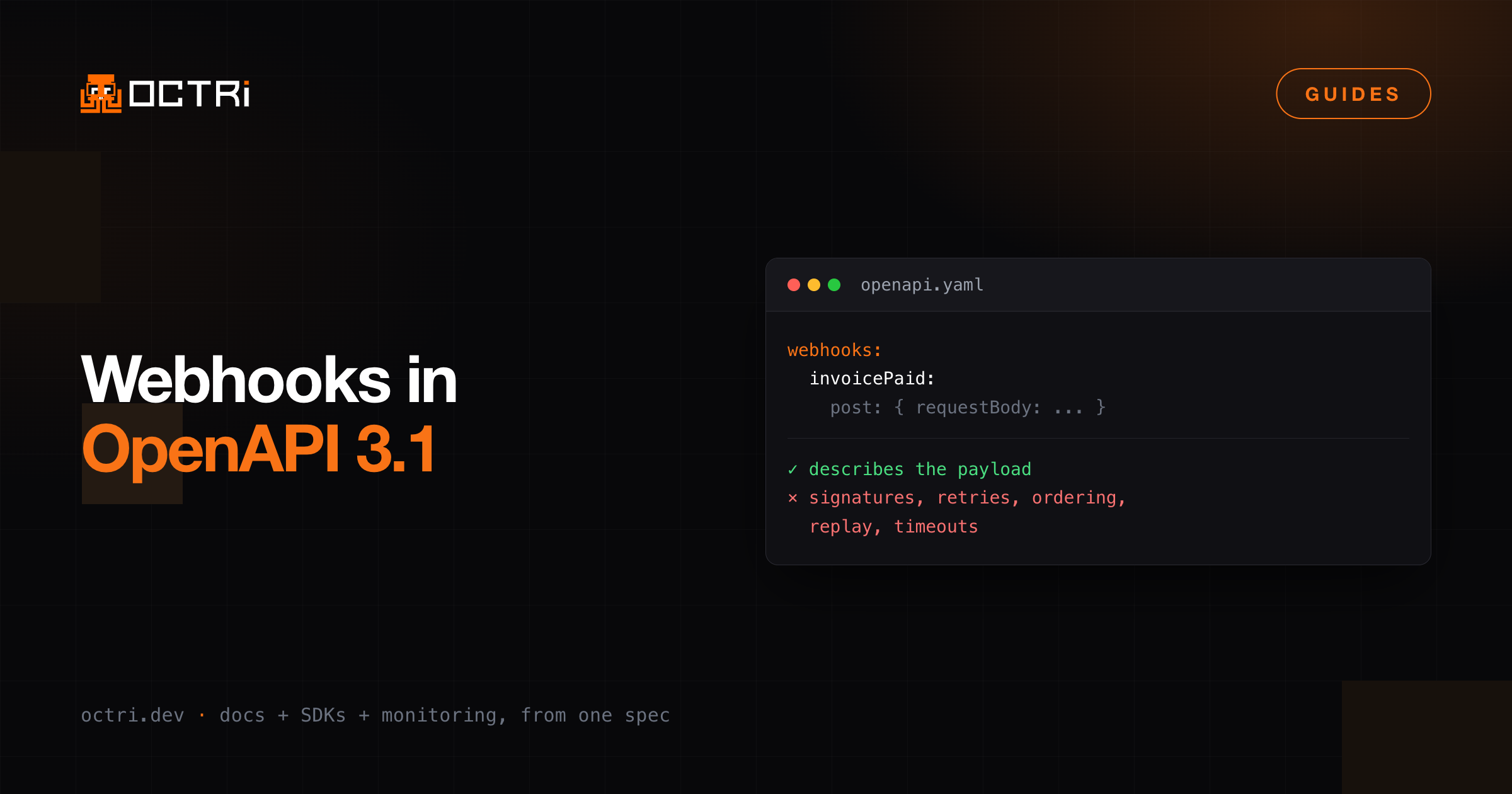
Documenting webhooks in OpenAPI 3.1, and the half it cannot describe
3.1 finally gave webhooks a home in the spec. It describes the payload, which is the easy part, and says nothing about delivery, which is where integrations break.
Guides5 min read
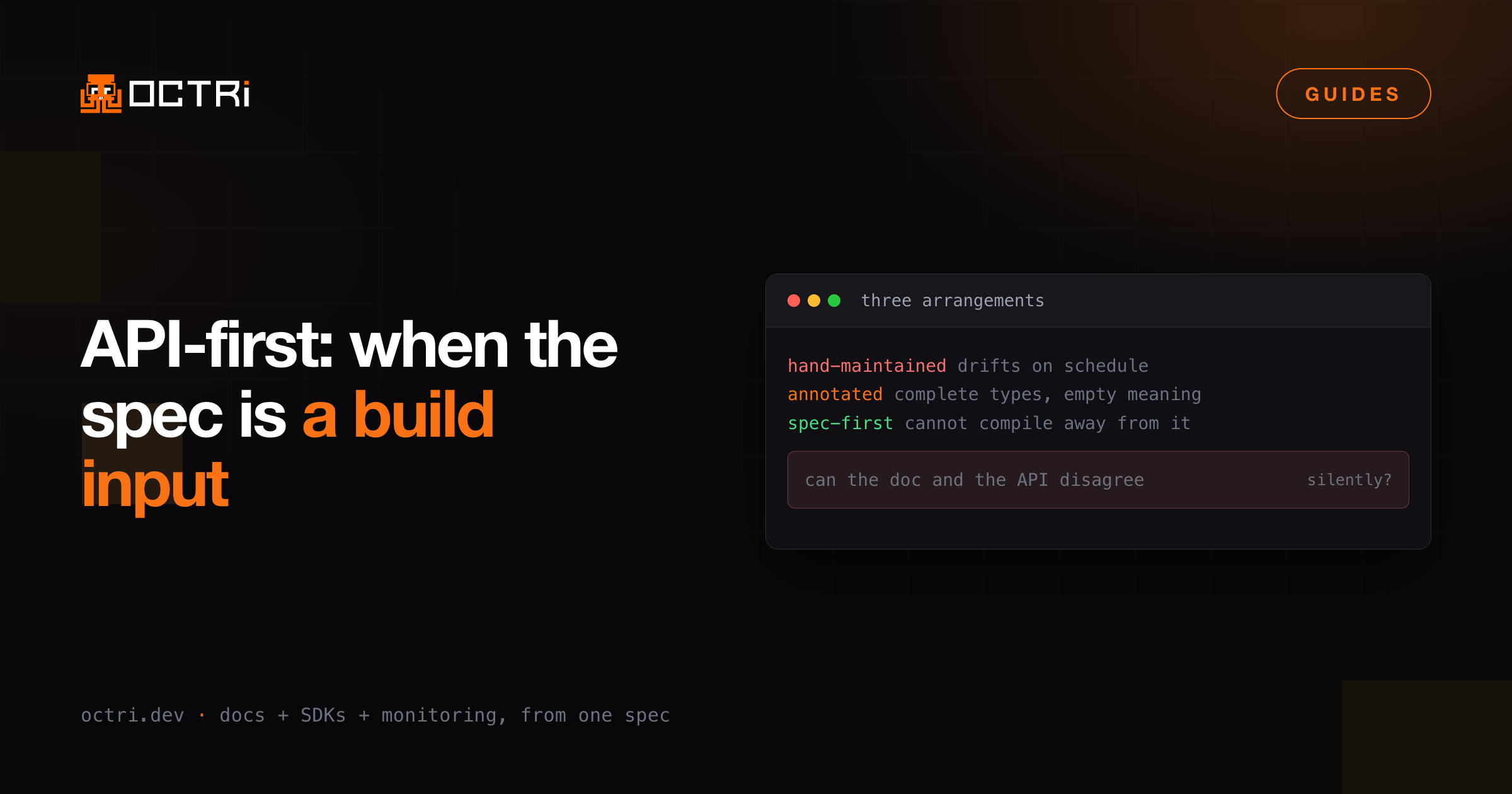
API-first in practice: what changes when the spec is the source of truth
The phrase is used to mean four different things. Only one of them changes how your team works, and it is the one that makes the spec a build input rather than a report.
Guides6 min read
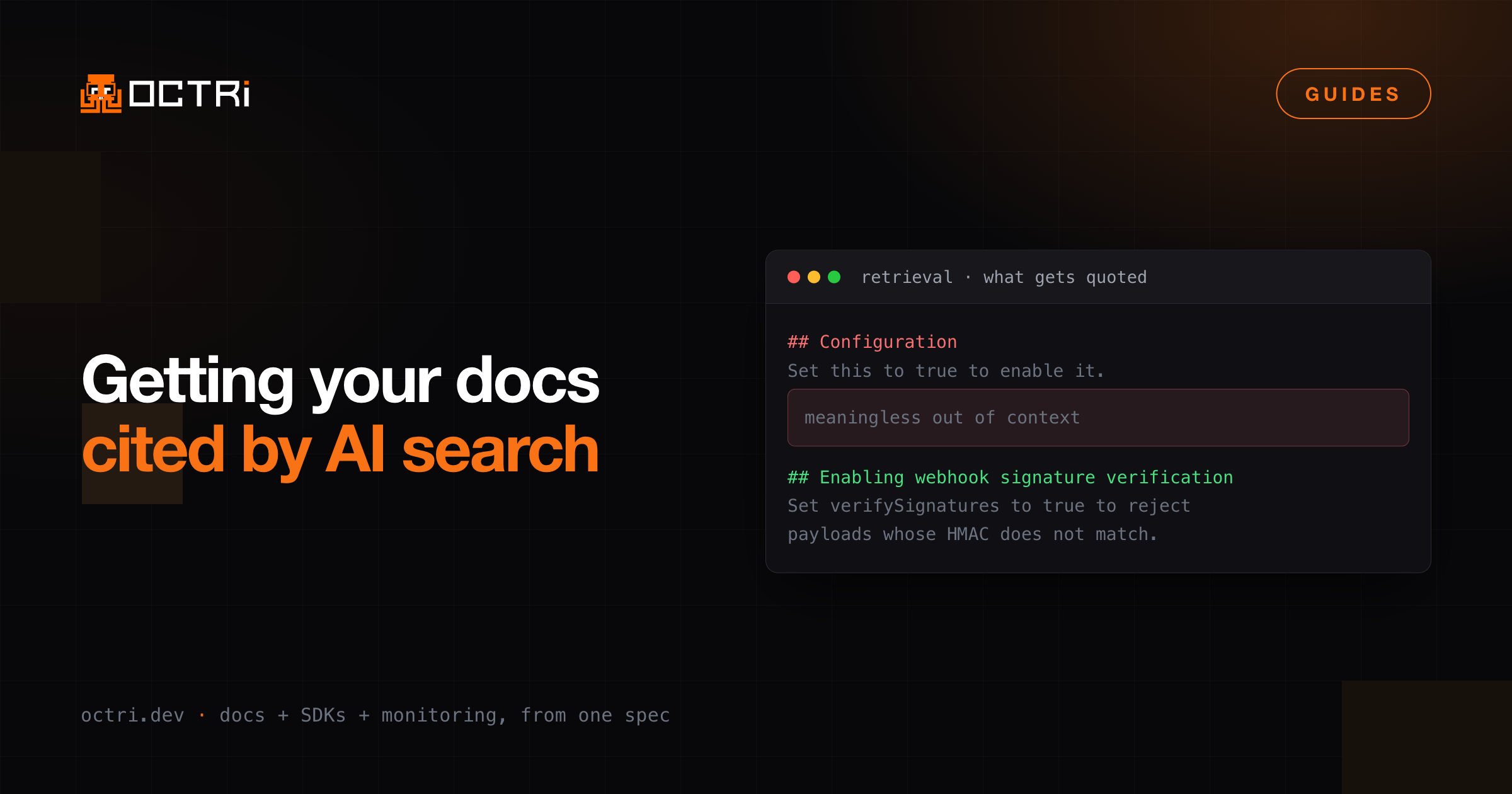
Getting your API docs cited when someone asks an AI about your product
People are asking assistants what your API does before they visit your site. What gets quoted back is decided by how your docs are structured, not by a file at your root.
Guides5 min read
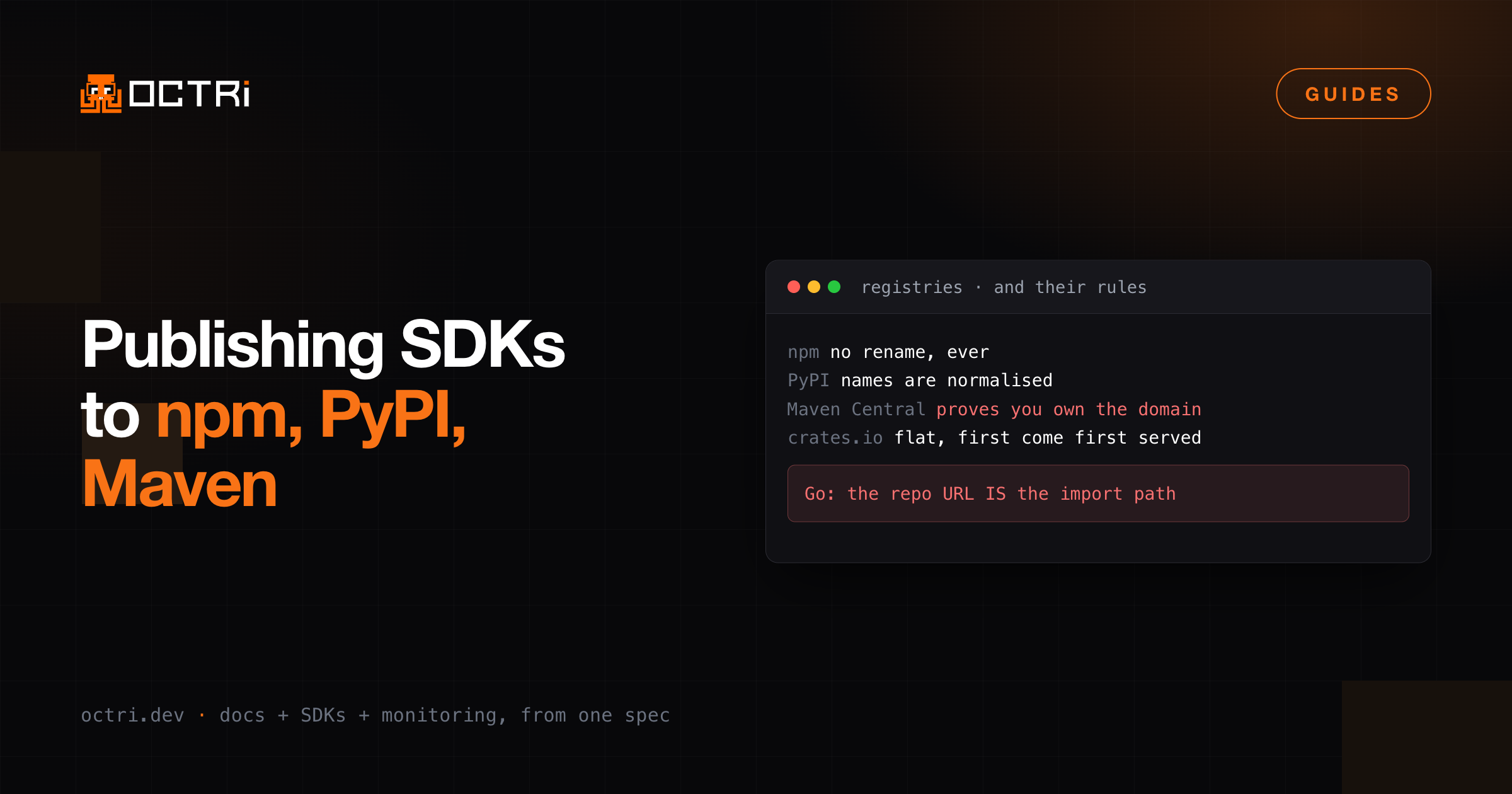
Publishing SDKs to npm, PyPI, Maven Central and the rest
Seven registries, seven sets of rules, and two languages that have no registry at all. The decisions you cannot take back are all made before the first release.
Guides5 min read
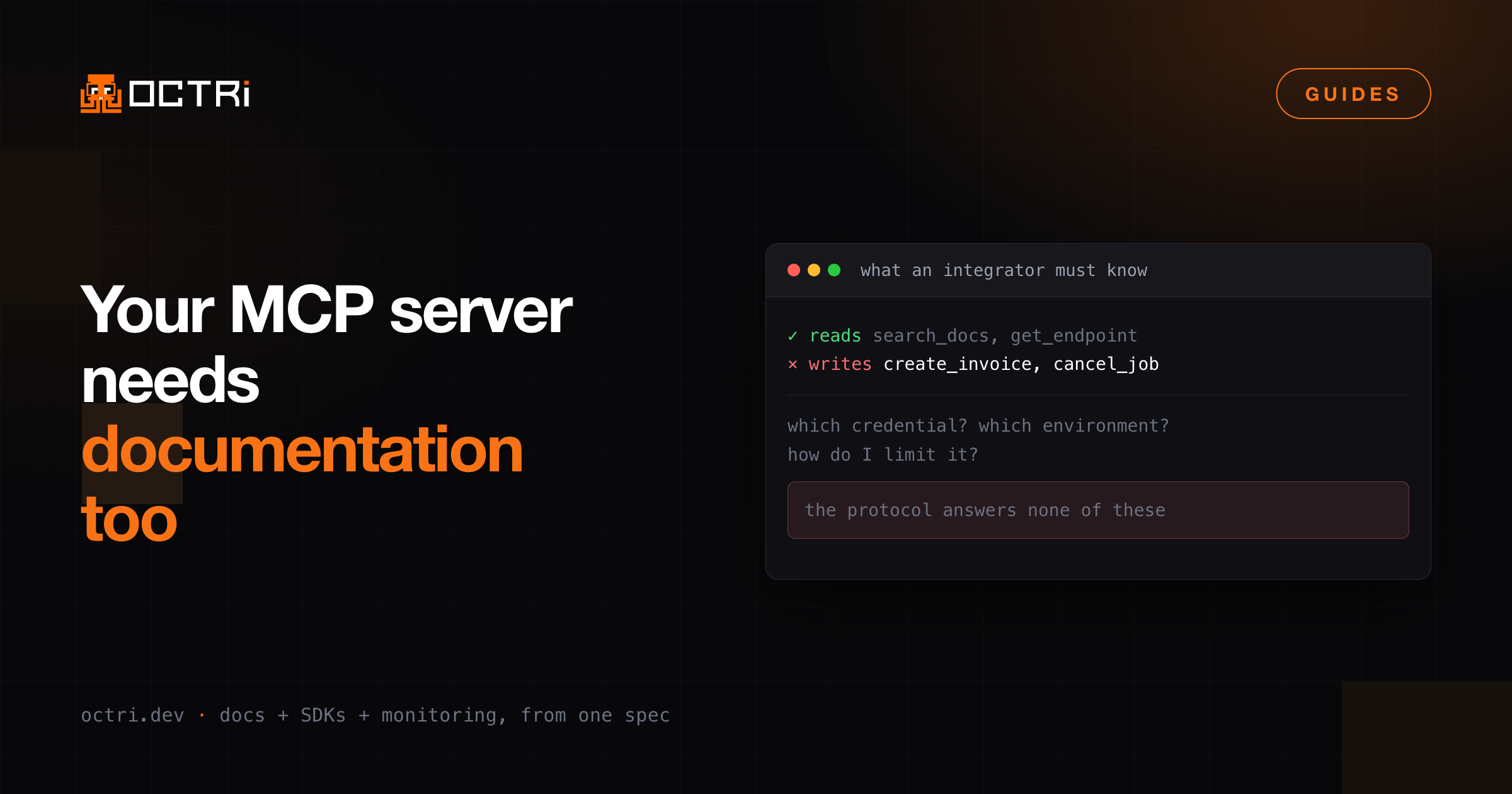
Your MCP server needs documentation, and it is not your API docs
There is no spec format for MCP servers yet, so what an integrator gets is a README and a config snippet. Here is what actually has to be in it.
Guides5 min read
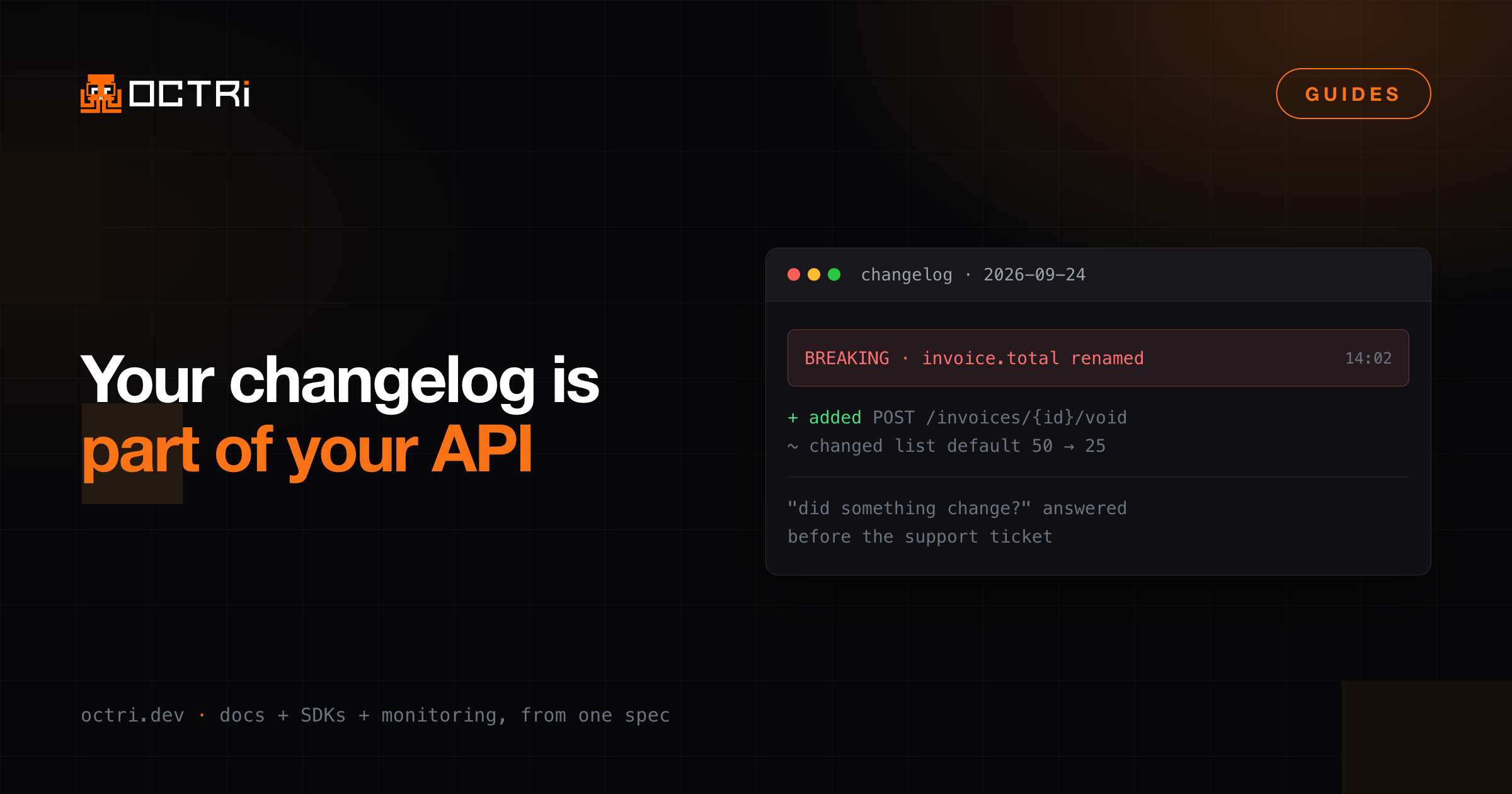
Your changelog is part of your API
Every integrator eventually asks the same question: did something change? If the answer lives in a release-notes page nobody subscribes to, they ask your support queue instead.
Guides5 min read
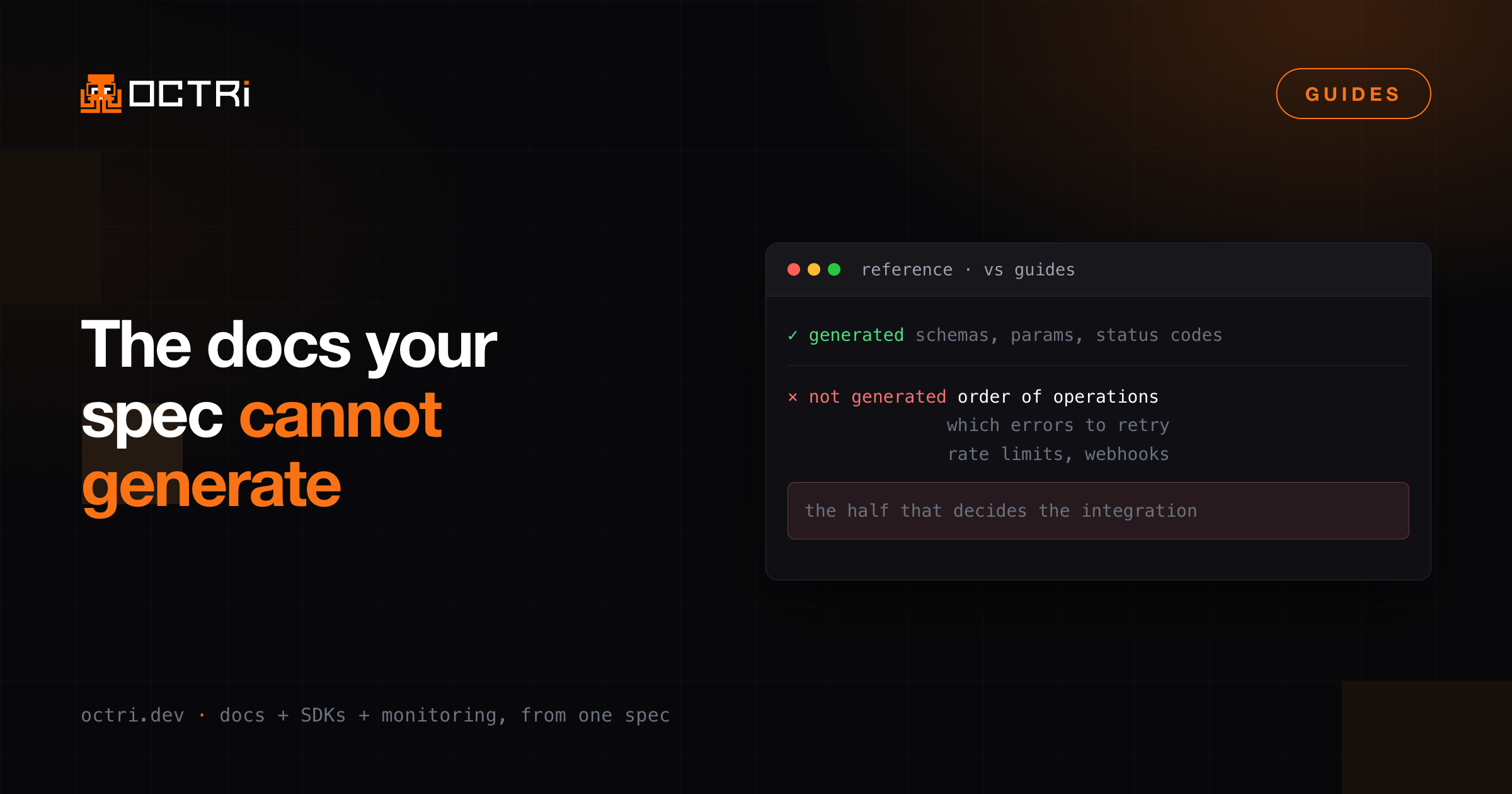
The API docs your OpenAPI spec cannot generate
A generated reference answers what an endpoint accepts. It never answers which endpoint to call, in what order, or what to do when one fails. That part is yours.
Guides6 min read
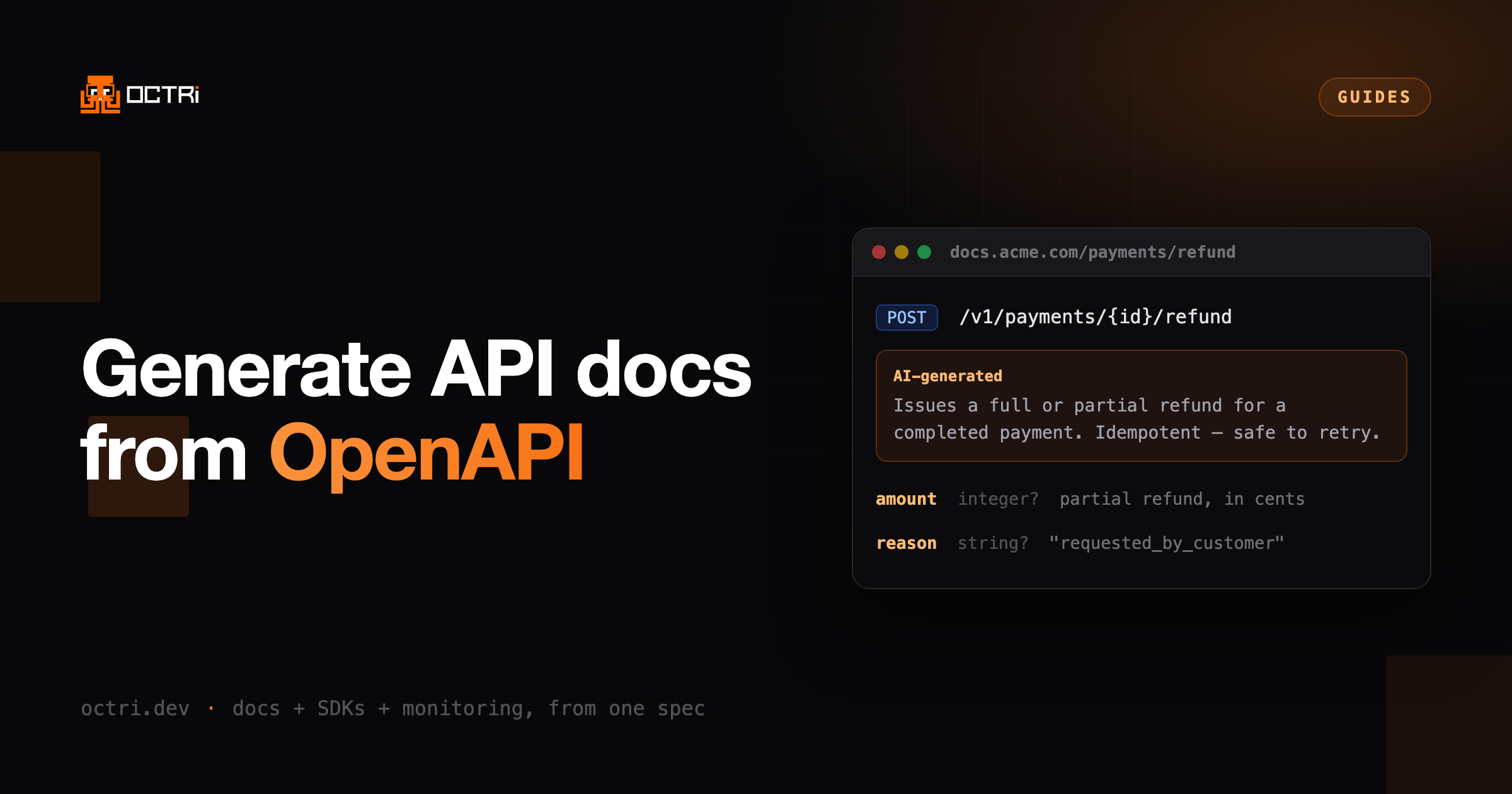
How to Generate API Documentation from an OpenAPI Spec (2026 Guide)
How to generate API documentation from an OpenAPI specification, and how to keep it in sync so it stops drifting from your code.
Guides1 min read
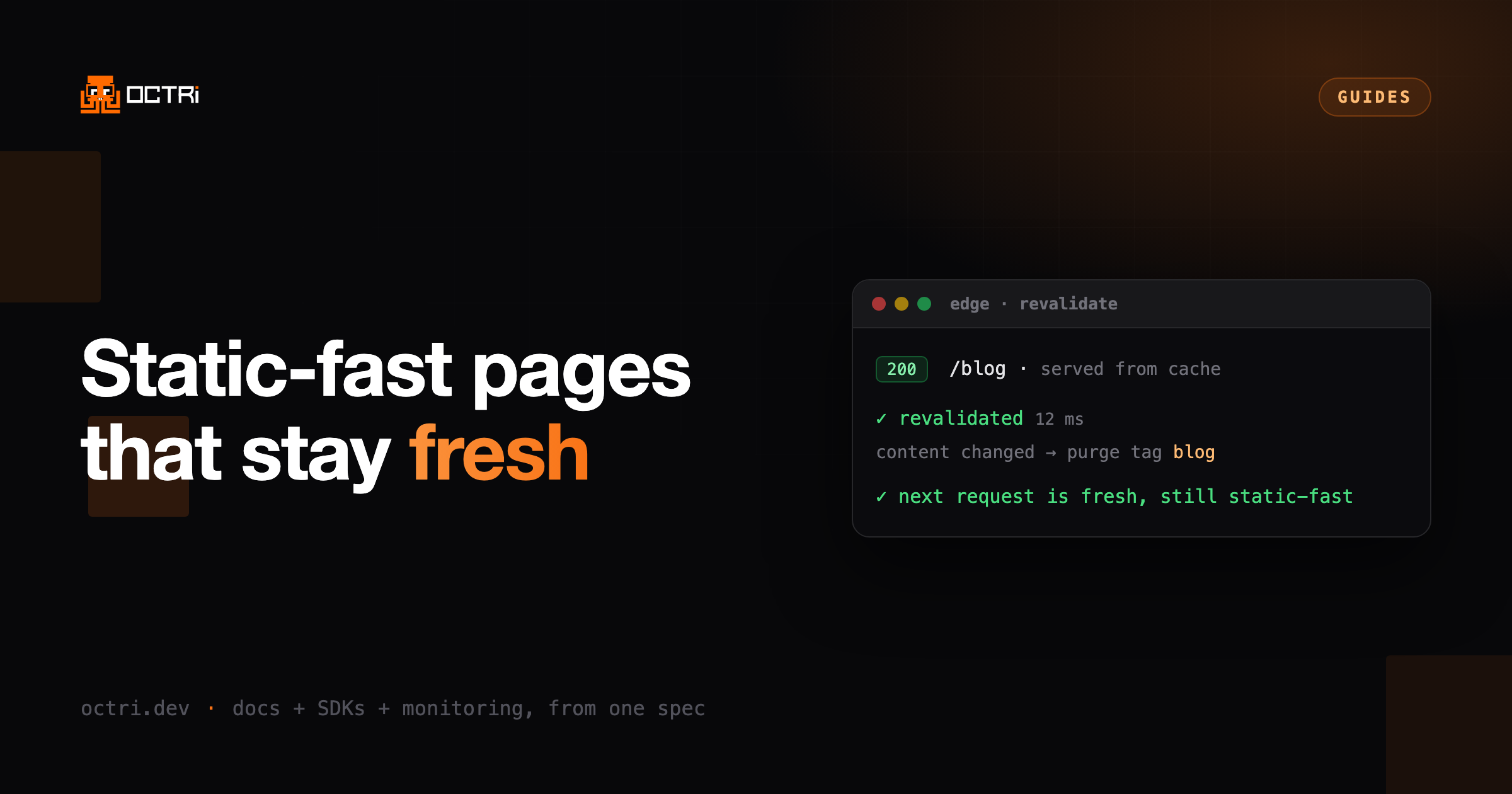
How Octri Keeps Static Pages Fresh with ISR
A look at how incremental static regeneration and on-demand revalidation give you static-fast pages that update the moment your content changes.