The Octri Blog
News, guides & deep-dives
Product updates and practical writing on API documentation, SDKs, and developer experience.
Showing articles tagged #sdks.
Guides4 min read
How to Choose an OpenAPI SDK Generator: 10 Questions to Ask
Ten practical questions for evaluating generated SDKs: spec support, code quality, auth, errors, publishing, monitoring, and exit cost.
Engineering5 min read
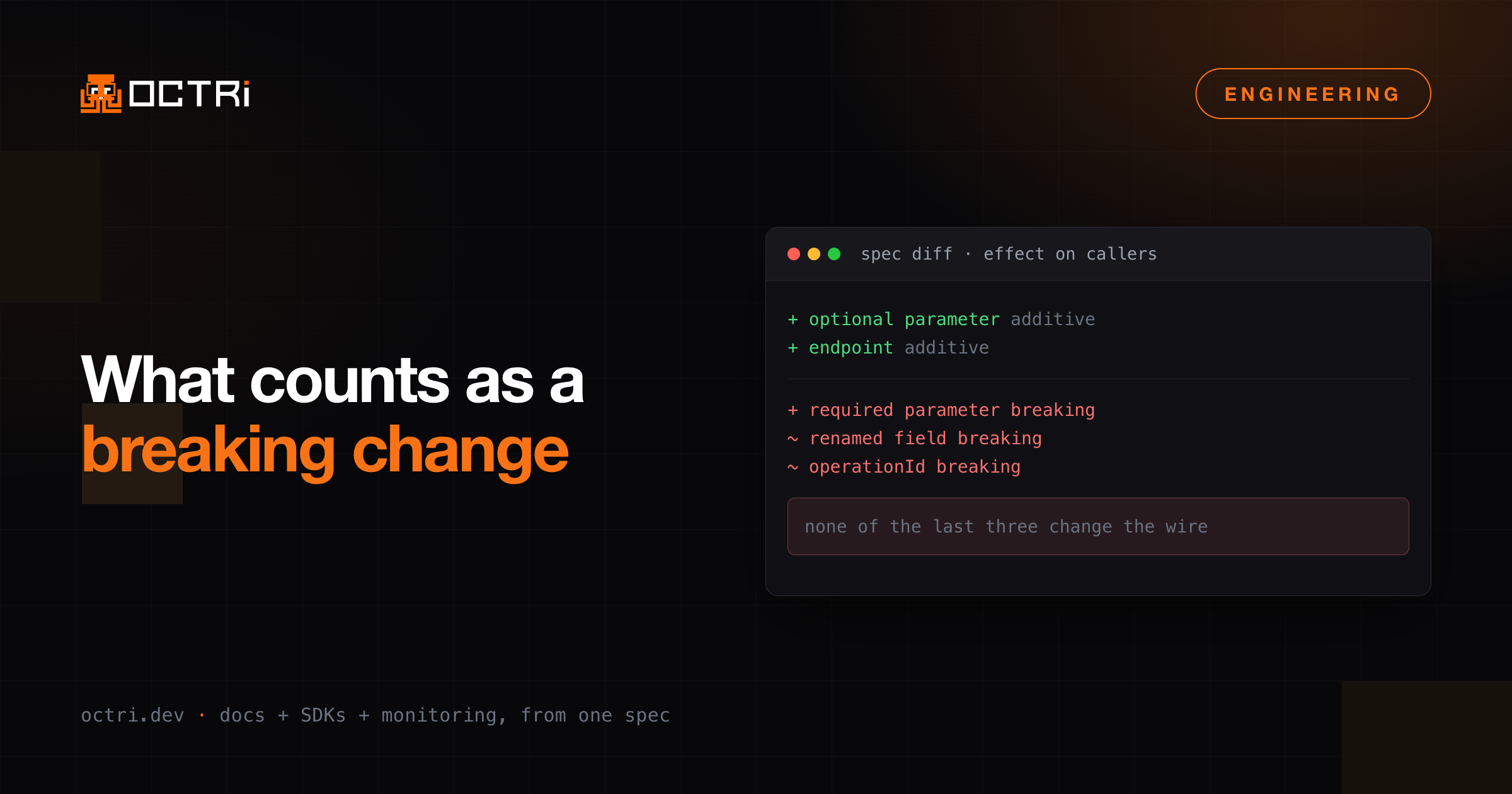
What counts as a breaking change when your SDK is generated
A one-line spec edit can break every call site your users wrote. Here is the table of what is additive, what is breaking, and which ones your spec diff will not warn you about.
Engineering5 min read
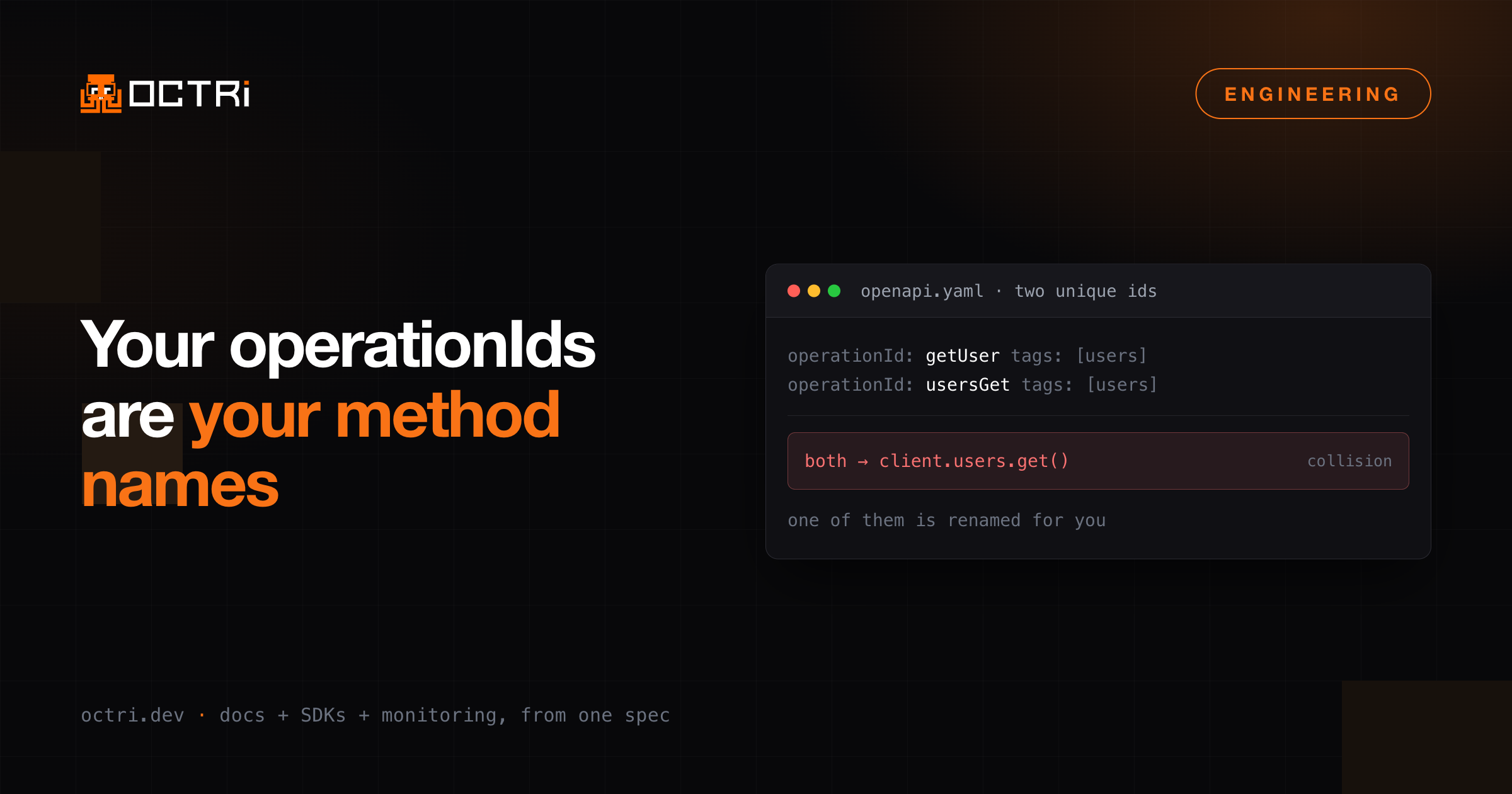
Your operationIds are your public method names, and unique is not enough
An operationId is not documentation metadata. It is the name your users type. Here is why uniqueness does not save you, and what actually collides.
Engineering5 min read
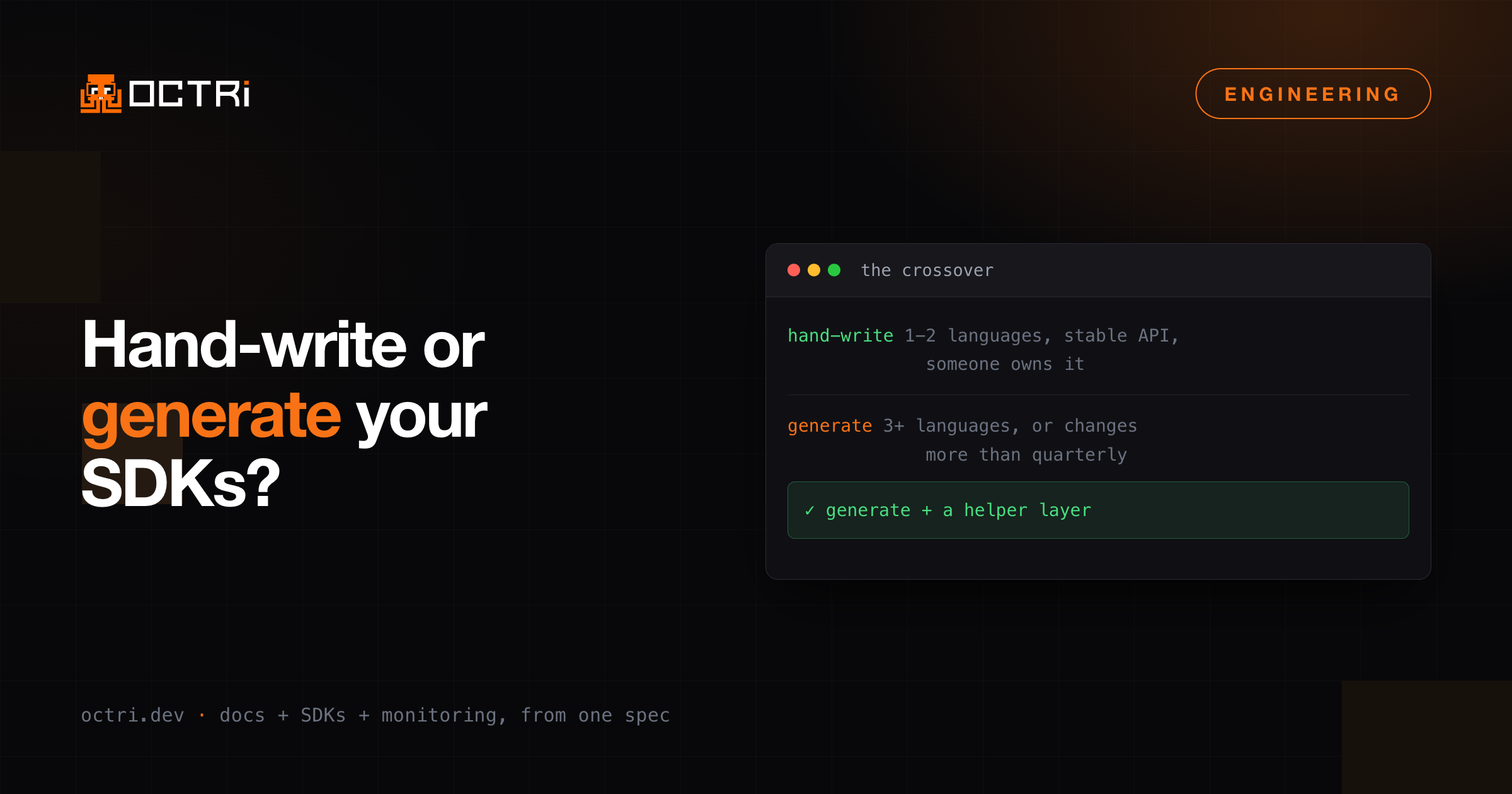
Should you hand-write your SDKs or generate them?
The honest answer depends on how many languages you ship and how often your API changes. For one language and a stable API, hand-writing wins.
Guides5 min read
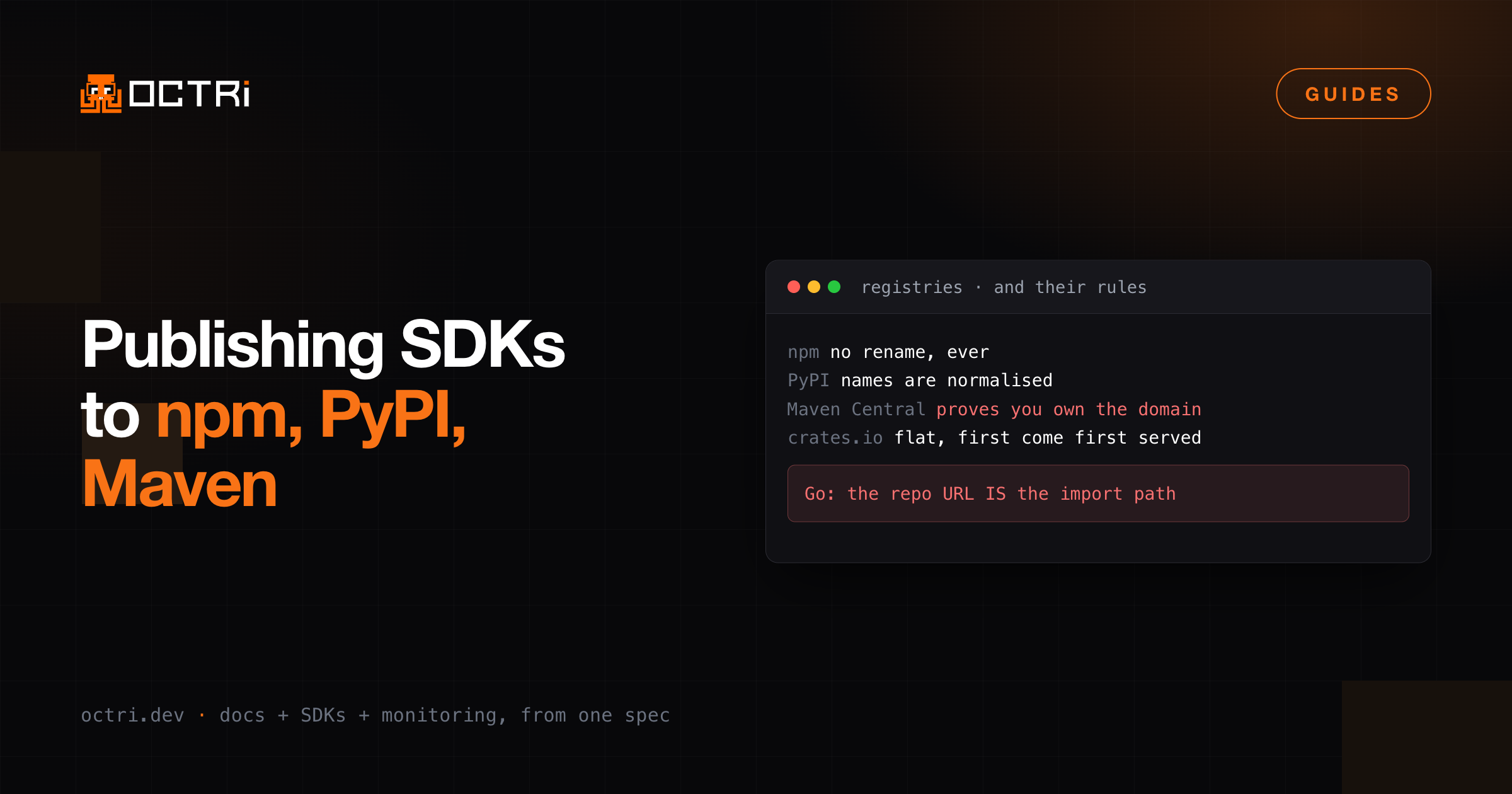
Publishing SDKs to npm, PyPI, Maven Central and the rest
Seven registries, seven sets of rules, and two languages that have no registry at all. The decisions you cannot take back are all made before the first release.
Engineering5 min read
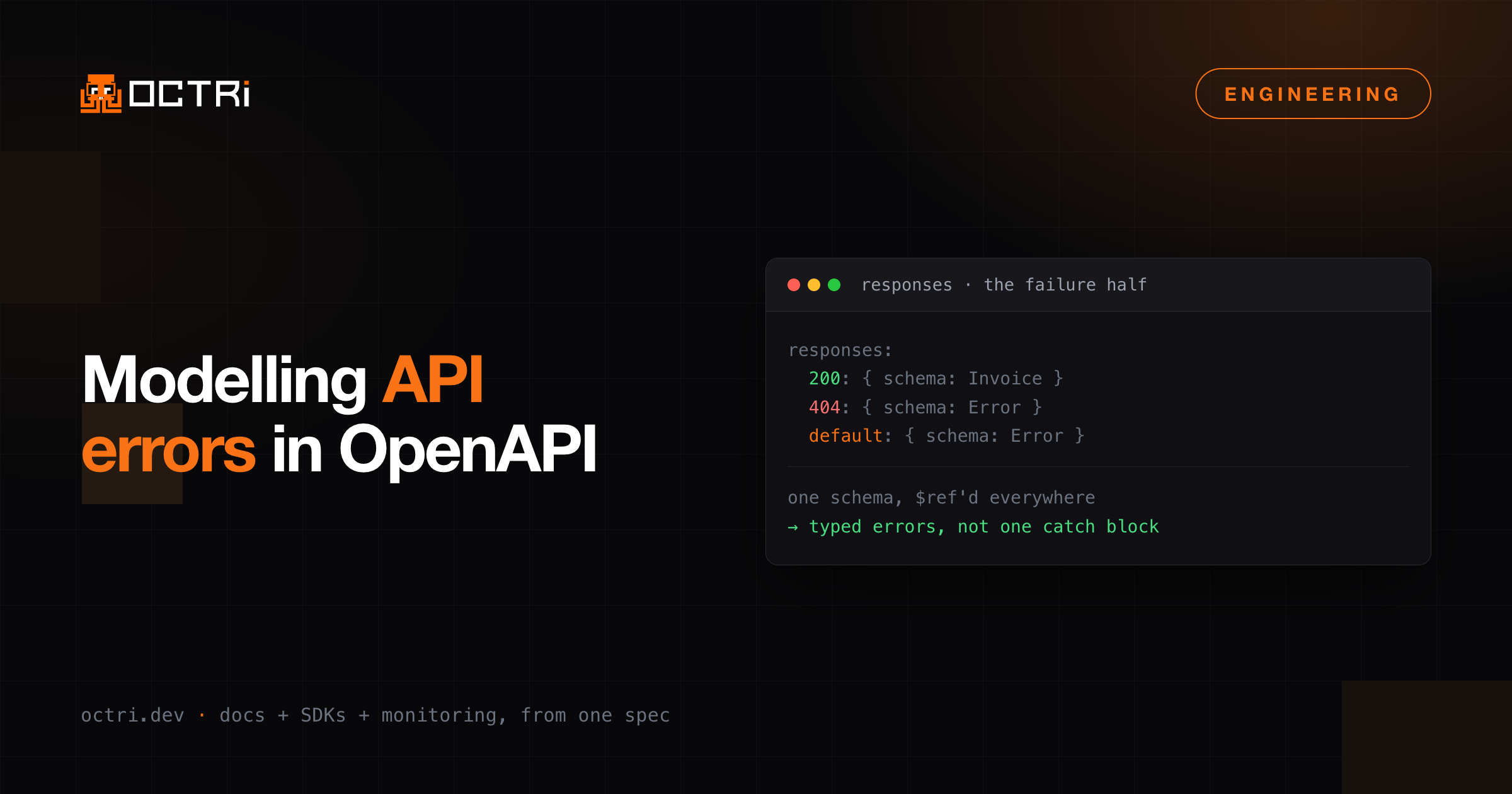
Modelling API errors in OpenAPI so your SDK can throw something useful
Most specs describe the happy path in detail and the failures not at all. That asymmetry lands on every consumer as one untyped catch block.
Engineering5 min read
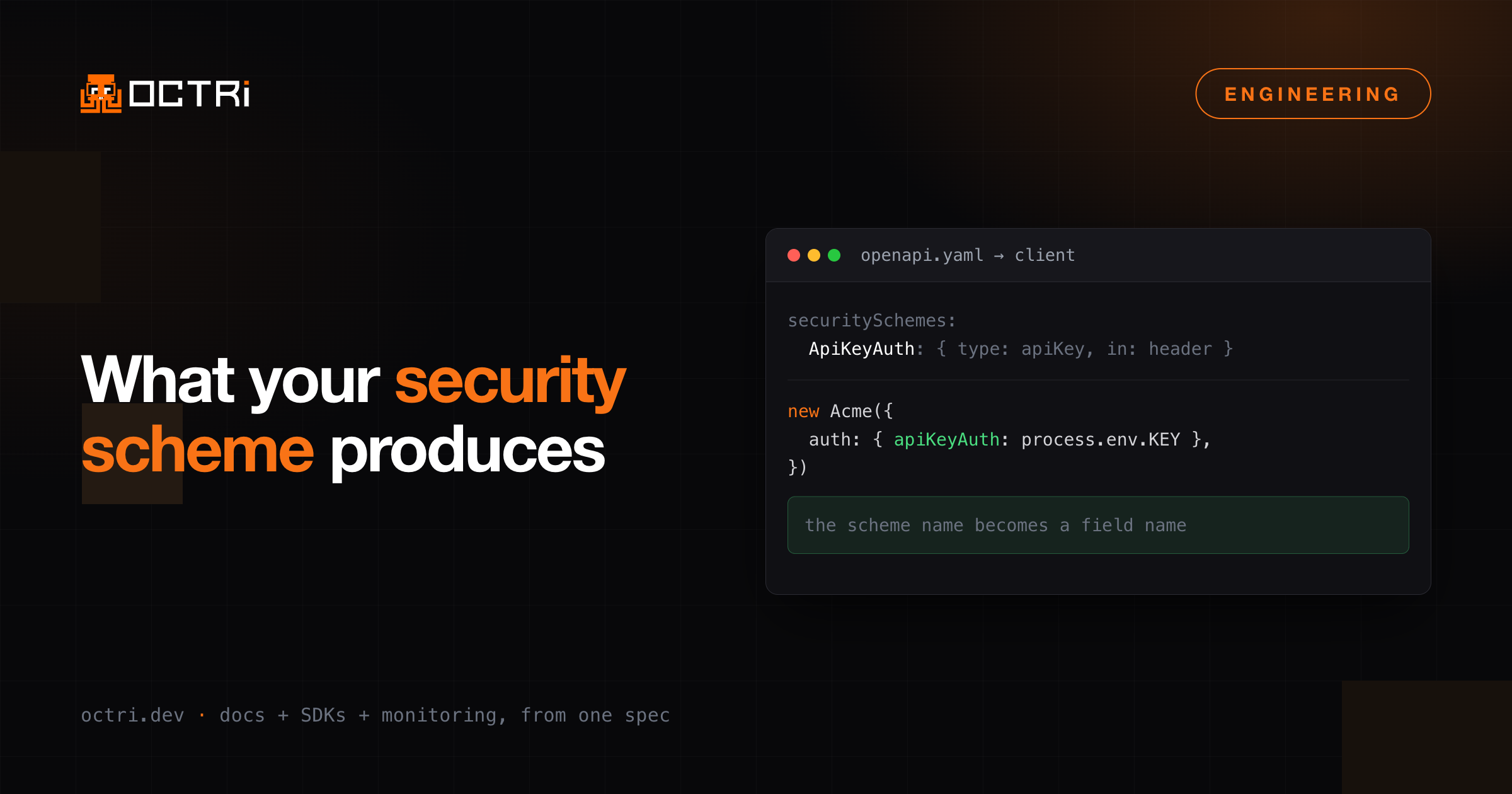
What your OpenAPI security scheme actually produces in an SDK
A security scheme is not documentation. It is the auth configuration your generated client ships with, and a spec that declares none produces a client with no way to authenticate.
Engineering6 min read
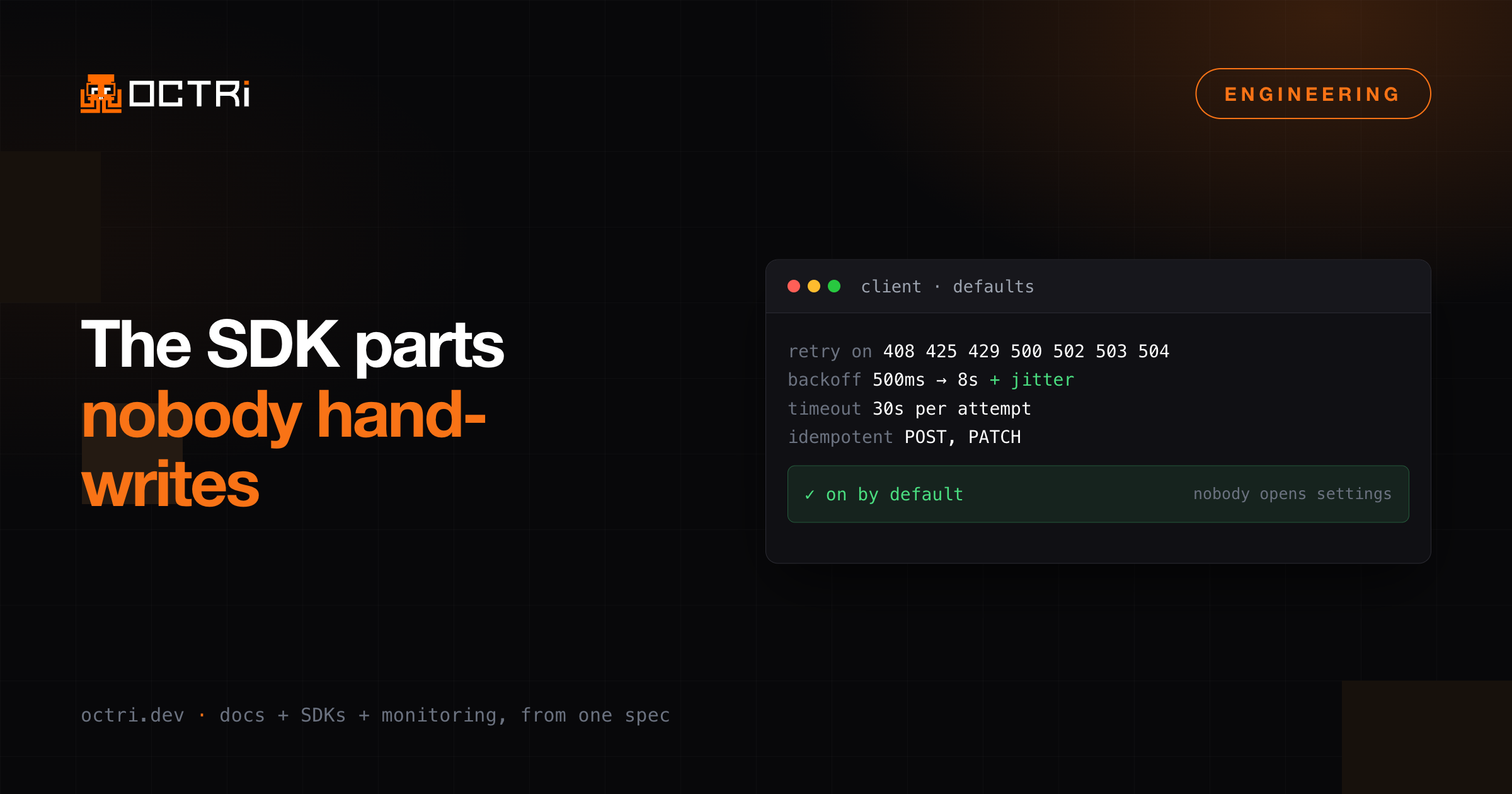
Retries, timeouts and idempotency: the parts of an SDK nobody hand-writes
Every client library needs them and almost no hand-written one has all three. The defaults matter more than the knobs, because most consumers never touch the knobs.
Engineering5 min read
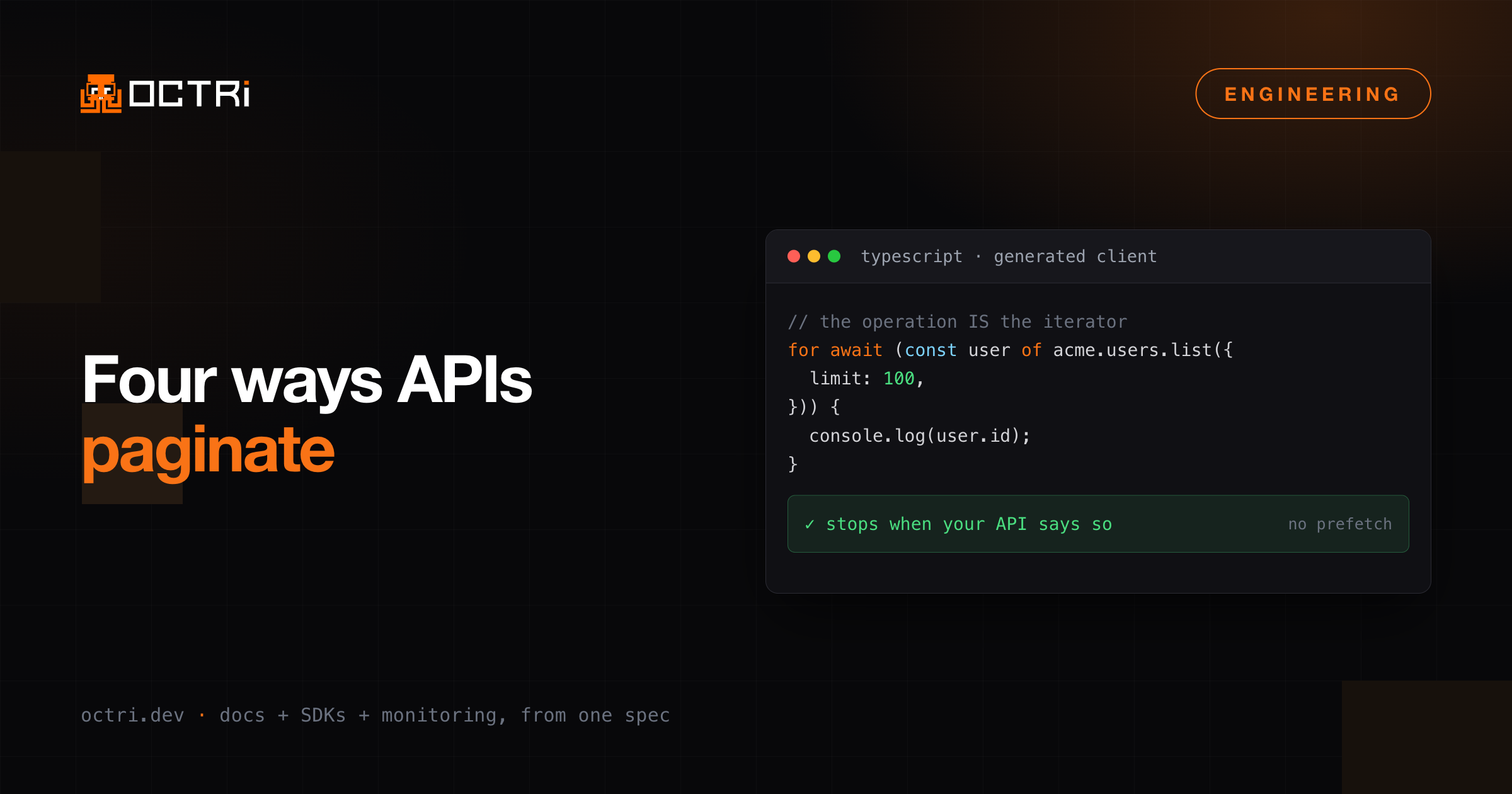
Four ways APIs paginate, and what each one does to your SDK
Cursor, offset, page number, next URL. Your choice decides whether your users write a loop or you write it for them, and whether the loop is even correct.
Product3 min read
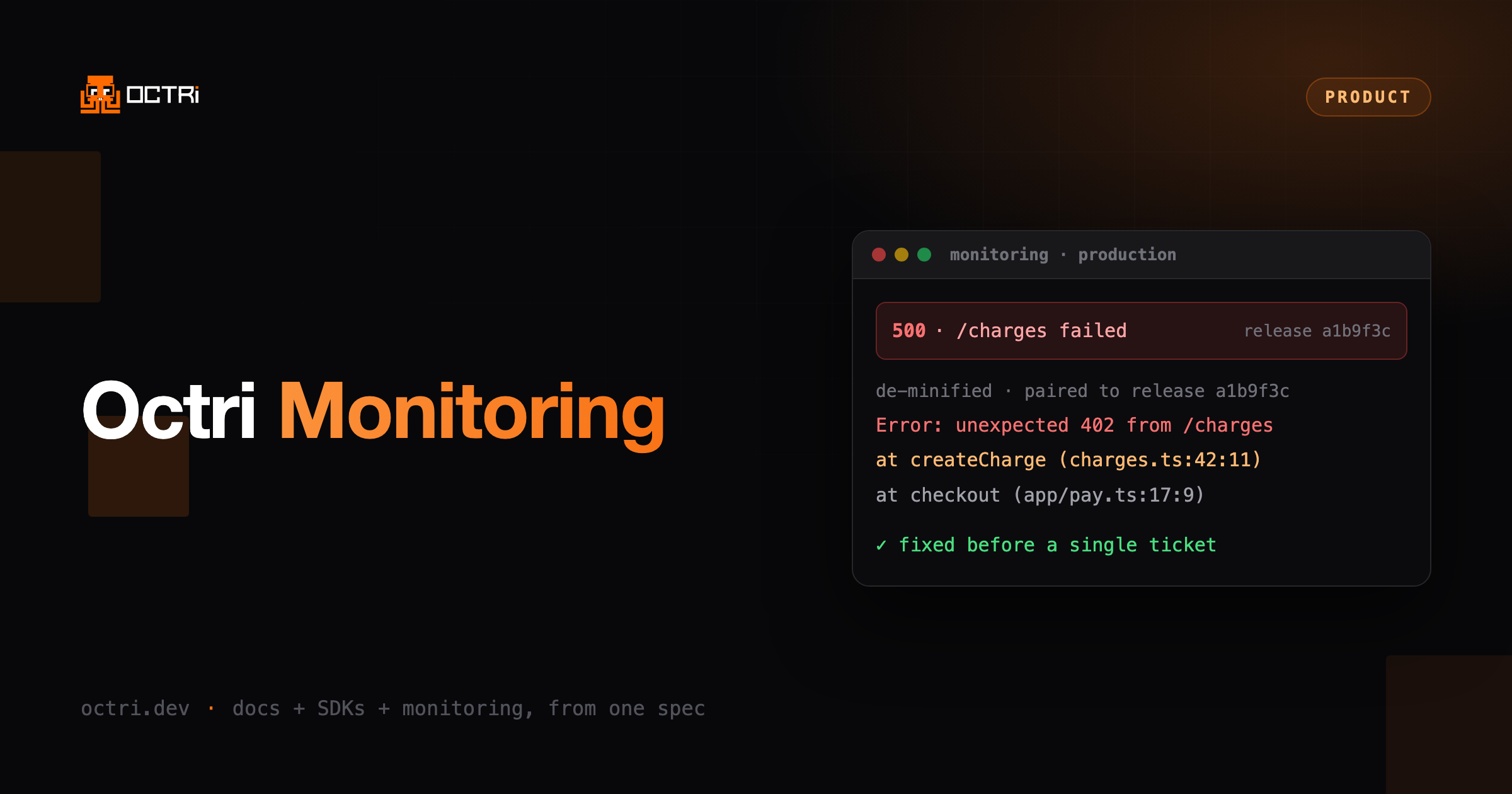
Inside Octri Monitoring: Observability for the SDKs You Ship
The SDKs you hand to other developers are the least-observed code you ship. Octri Monitoring watches them: de-minified stack traces tagged to a release, grouped issues, traces, performance, alerts, and a live tail. Included on every plan.
Product3 min read
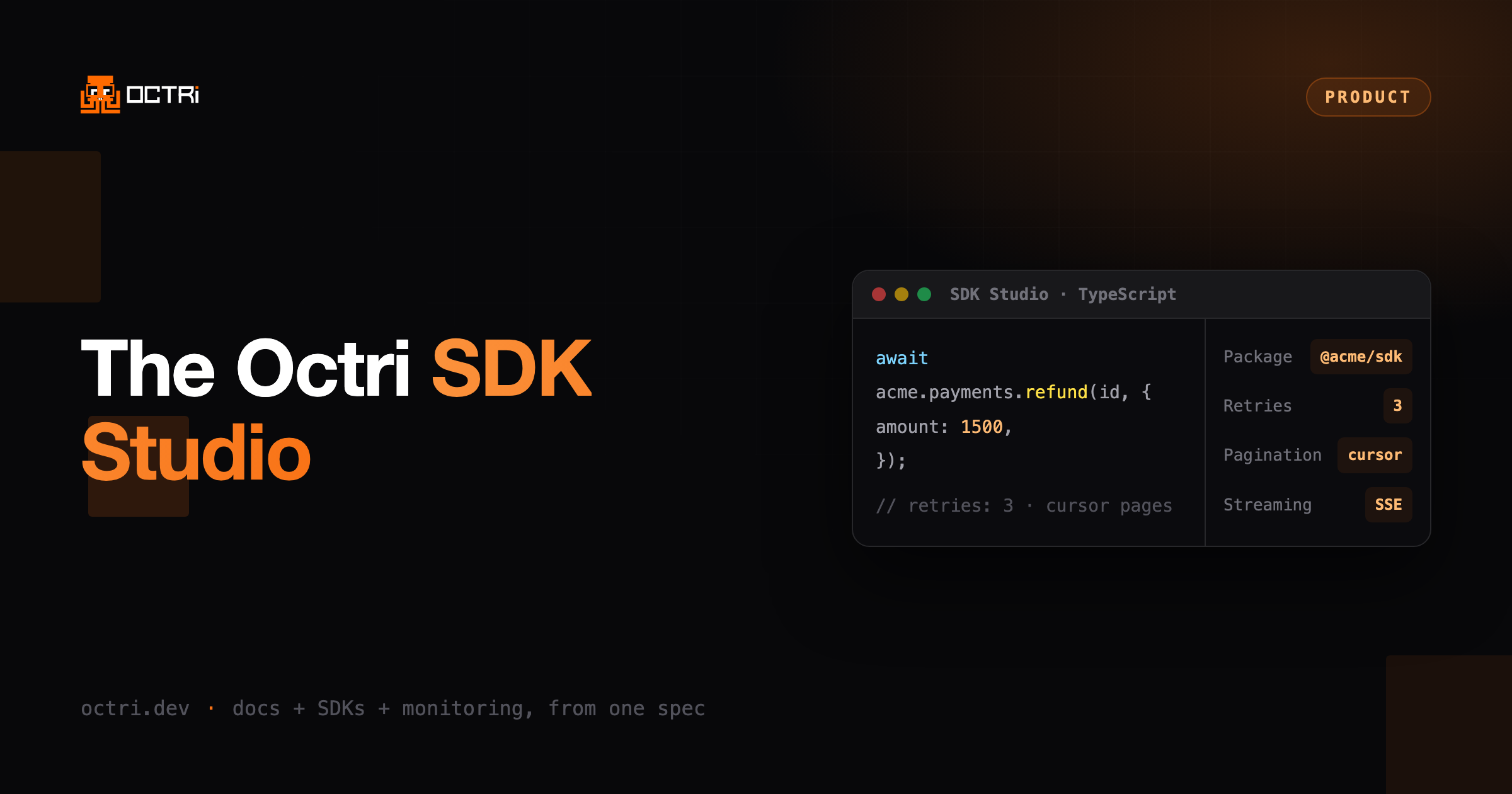
Inside Octri SDK Studio: Tune Every SDK, See the Code Change Live
SDK Studio turns every knob on your generated SDKs in a real UI, per endpoint, with a live preview of the code as you change it. Package names, retries, pagination, streaming, deprecations, auth, custom transforms, and which endpoints ship.
Comparisons4 min read
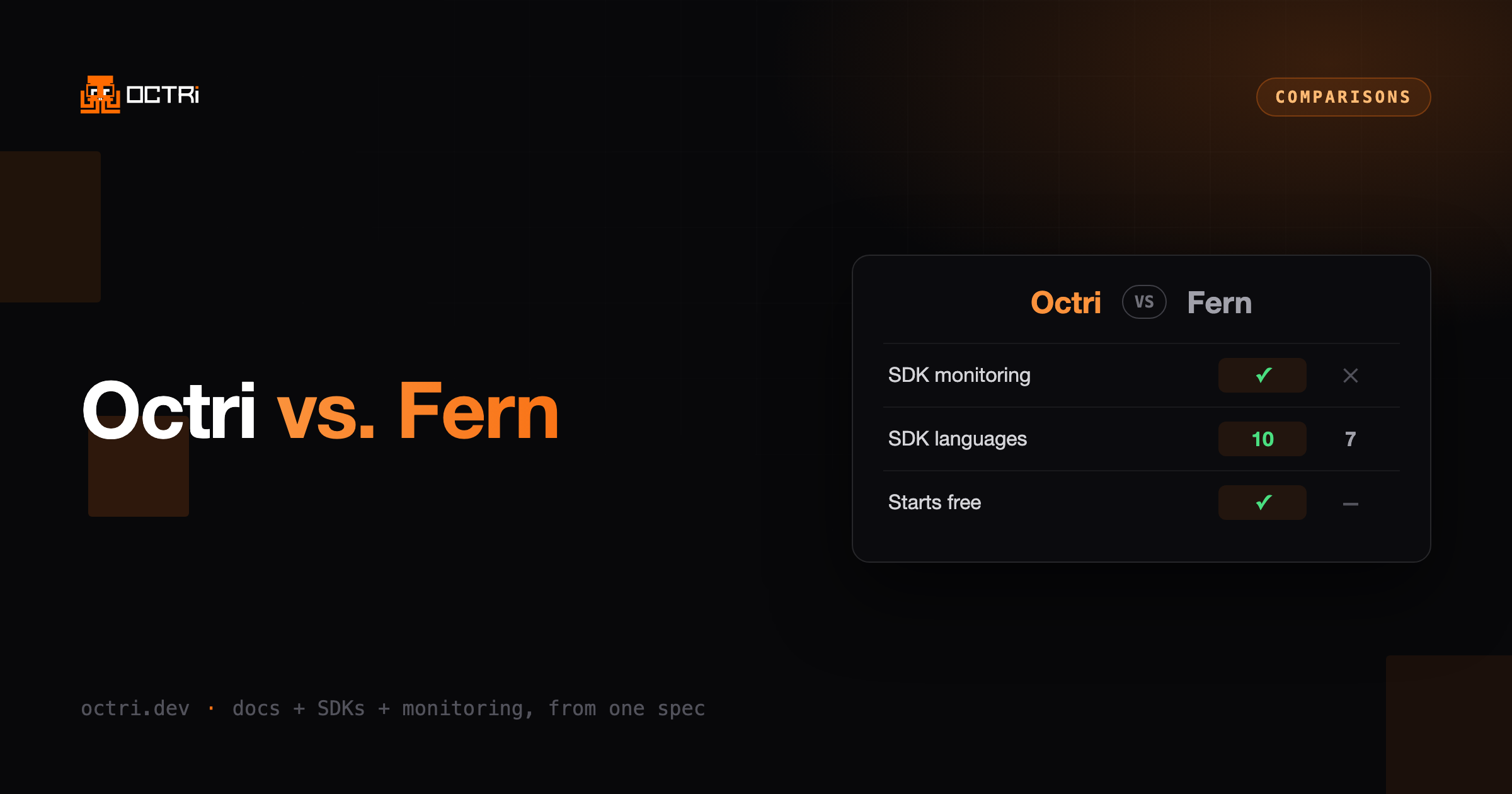
Octri vs. Fern: Docs & SDK Generation Compared (2026)
Fern and Octri both turn one API definition into docs and SDKs. Octri adds production monitoring Fern has no answer for, more languages including Rust, a nicer docs editor, and a free tier.
Comparisons4 min read
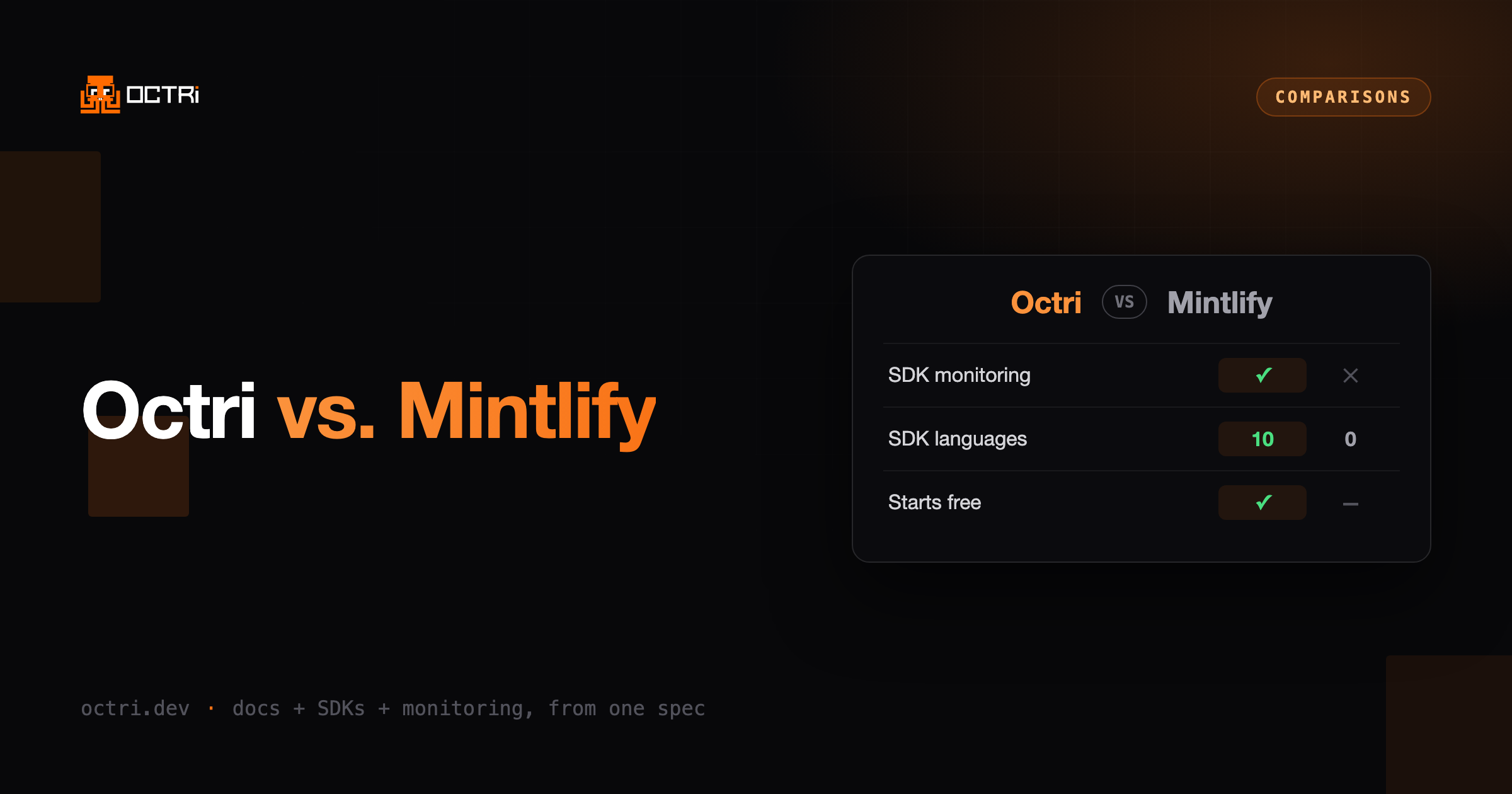
Octri vs. Mintlify: Docs Platform vs. Docs + SDKs (2026)
Mintlify makes a docs site and stops there. It cannot generate a single SDK. Octri gives you docs that look just as good, plus first-party SDKs in 10 languages and production monitoring, from one OpenAPI spec.
Engineering4 min read
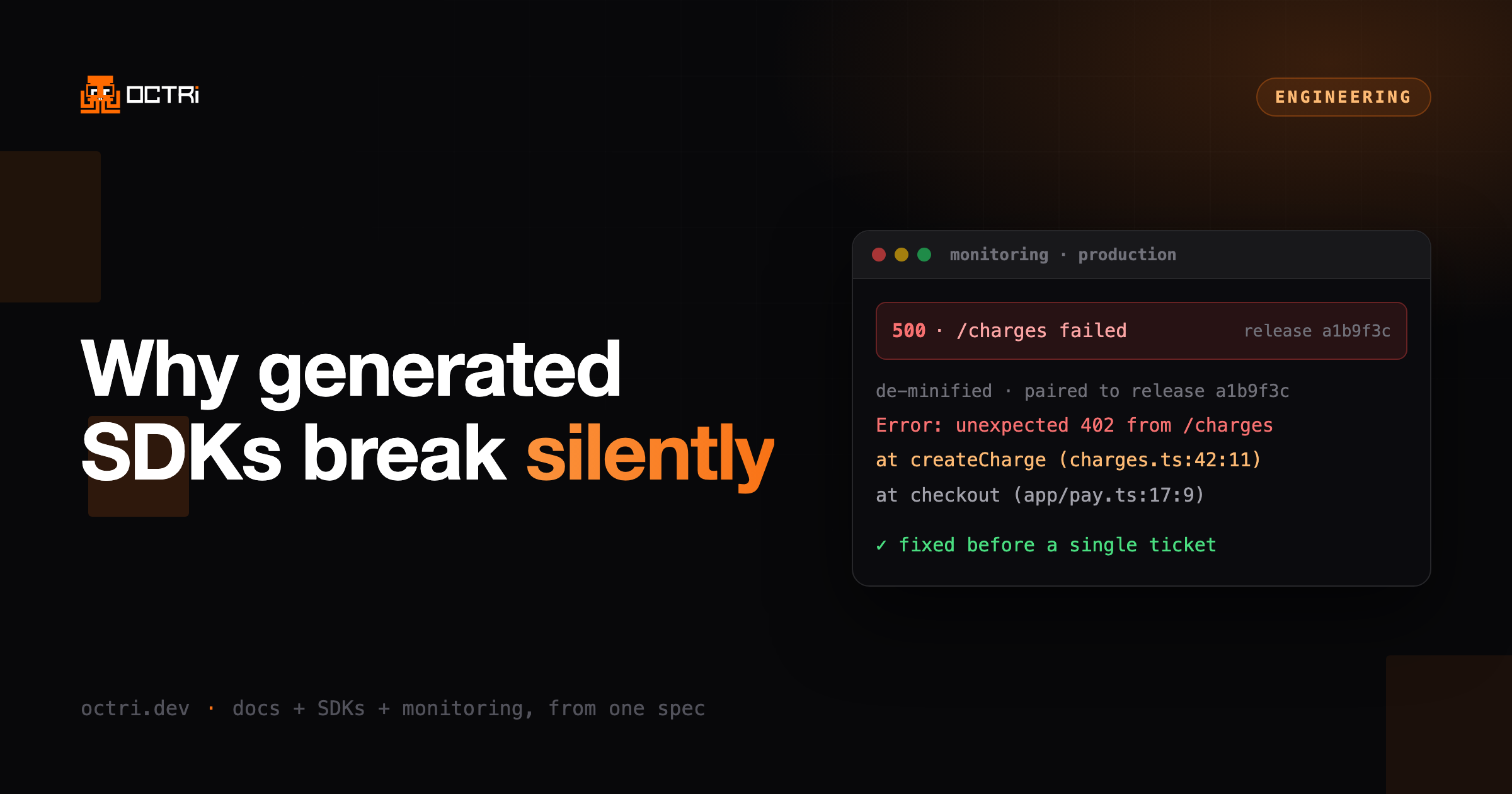
Why generated SDKs break silently, and how to make them observable
Generated SDKs go dark the moment they ship. Here's why they fail silently in production, and the three pieces you need to de-minify their stack traces and see the failures.
Comparisons3 min read
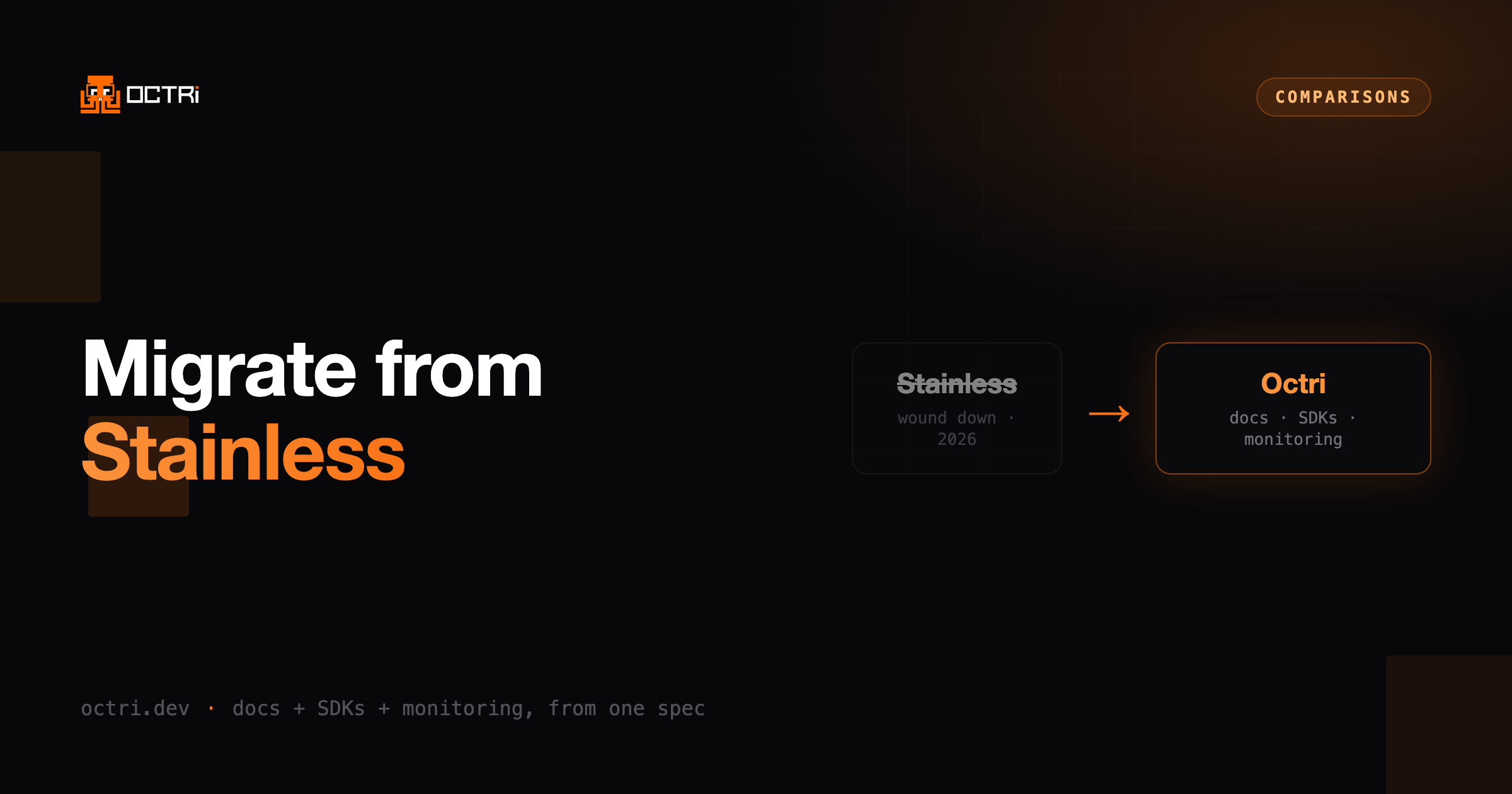
Stainless Alternative: Migrate Your OpenAPI SDKs to Octri
Move a Stainless OpenAPI project to Octri: import your spec and stainless.yml, then review language, package, repository and endpoint settings.
Product2 min read
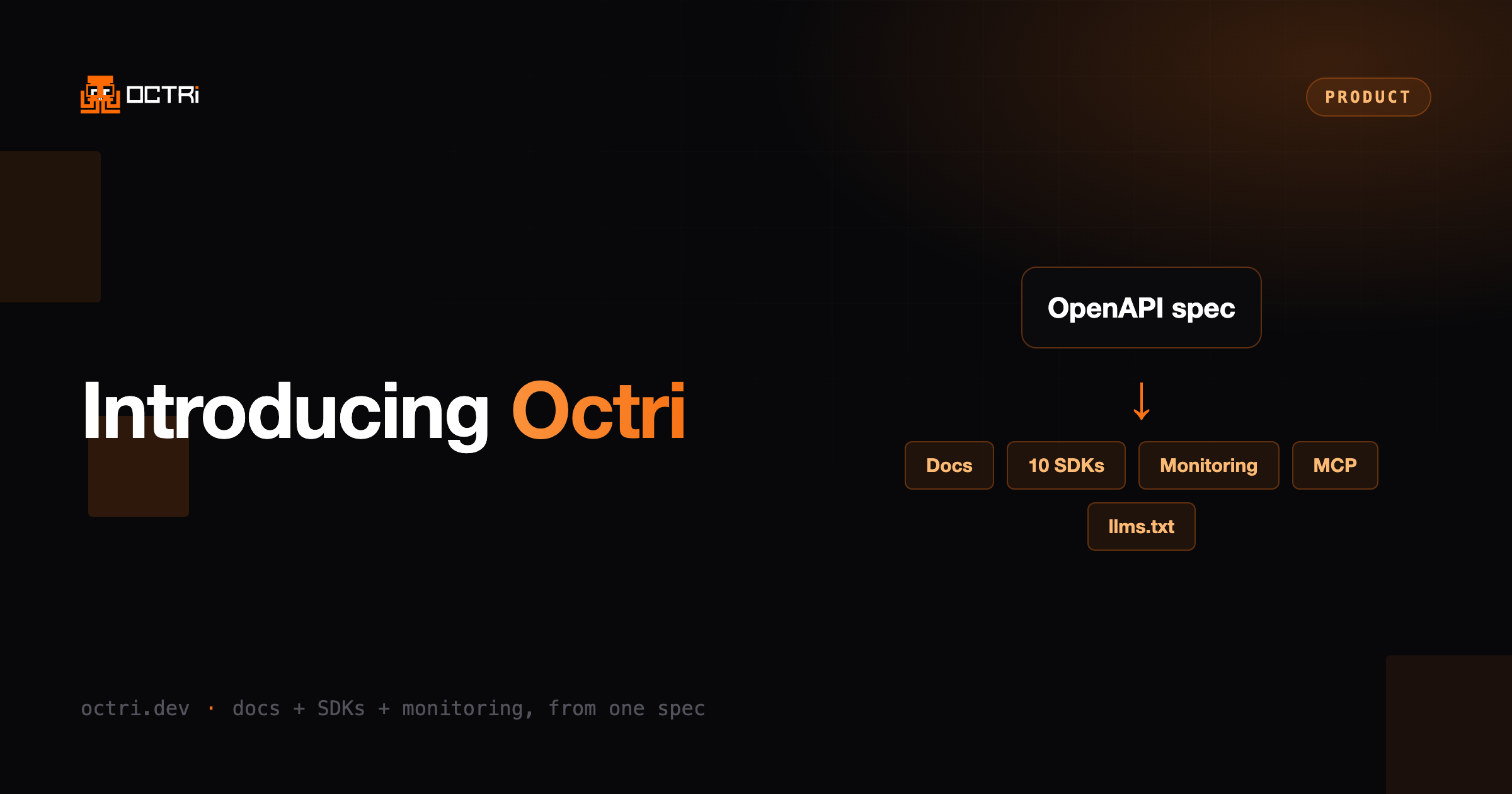
Introducing Octri: API Docs and SDKs, Automatically
Upload an OpenAPI spec and get complete documentation plus production-ready SDKs in ten languages, updated on every push.