By the Octri team · Updated
What is a client library? Meaning, examples and what's inside
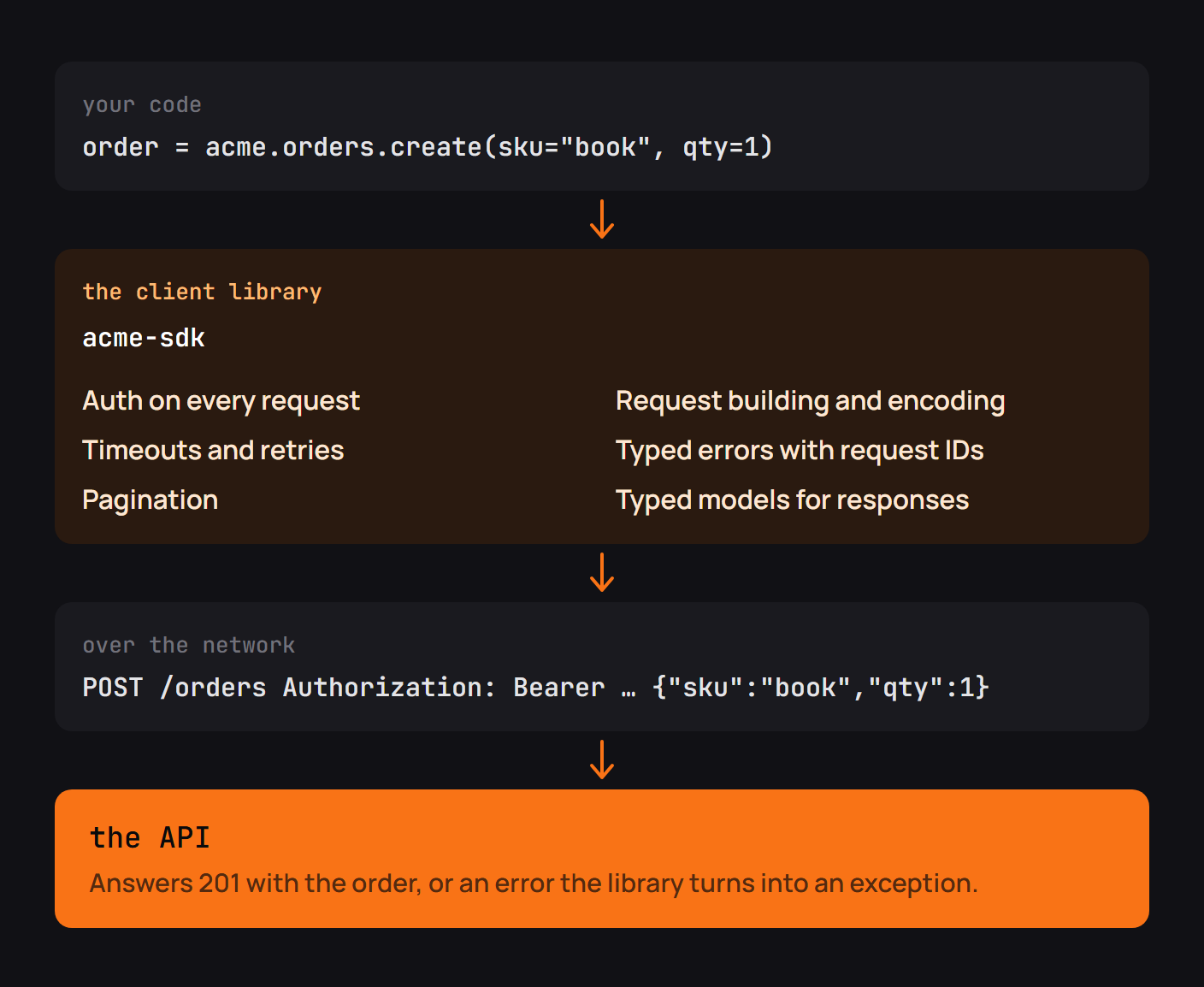
A client library makes a remote service feel like a familiar part of your programming language. Instead of assembling a URL, headers and JSON body for each call, you invoke a method and receive a value or a typed error. It is a small change in syntax and a larger change in who maintains the integration details.
What is a client library?
A client library sits inside your application and translates method calls into the API's network protocol. It usually owns authentication, serialization, timeouts and parsing; a more complete one offers typed data models, error categories, pagination and safe retry behavior. The service stays remote. The library does not cache every resource magically or remove the need for a network connection.
The important feature is that the application calls a stable interface while the API provider maintains the request mechanics behind it.
Client library, SDK and API wrapper
These labels overlap. For most web services, a client library and an API SDK are the same installable package. A thin API wrapper may expose endpoint methods but leave errors, pagination and retries to the caller. A platform SDK, such as Android's, can include compilers and emulators, which makes it much broader than a simple client library.
The useful question is which responsibilities the package accepts, not what the repository calls itself.
Inside three real client libraries
Stripe's Python library, OpenAI's Python client and Twilio's helper library all connect application code to remote APIs, but their public shapes and defaults reflect their services. Stripe emphasizes payment objects and API-specific error behavior. OpenAI's client offers synchronous and asynchronous entry points and typed response models. Twilio provides methods for its communications resources and related helpers.
Read each package's current README and dependency list before copying code from a tutorial. Names, retries, timeouts and supported Python versions are release-specific. The fact that all three are called libraries does not make them interchangeable.
Client libraries behave differently
I built a small local orders client to see what actually moves into the library. A direct cursor-following loop and a client.orders() iterator fetched the same two orders using two HTTP calls apiece. The wrapper did not reduce network traffic; it removed cursor bookkeeping from the application. I also made the local server return 429 followed by 200 to confirm that retry behavior can be tested as an explicit policy rather than inferred from a successful final result.
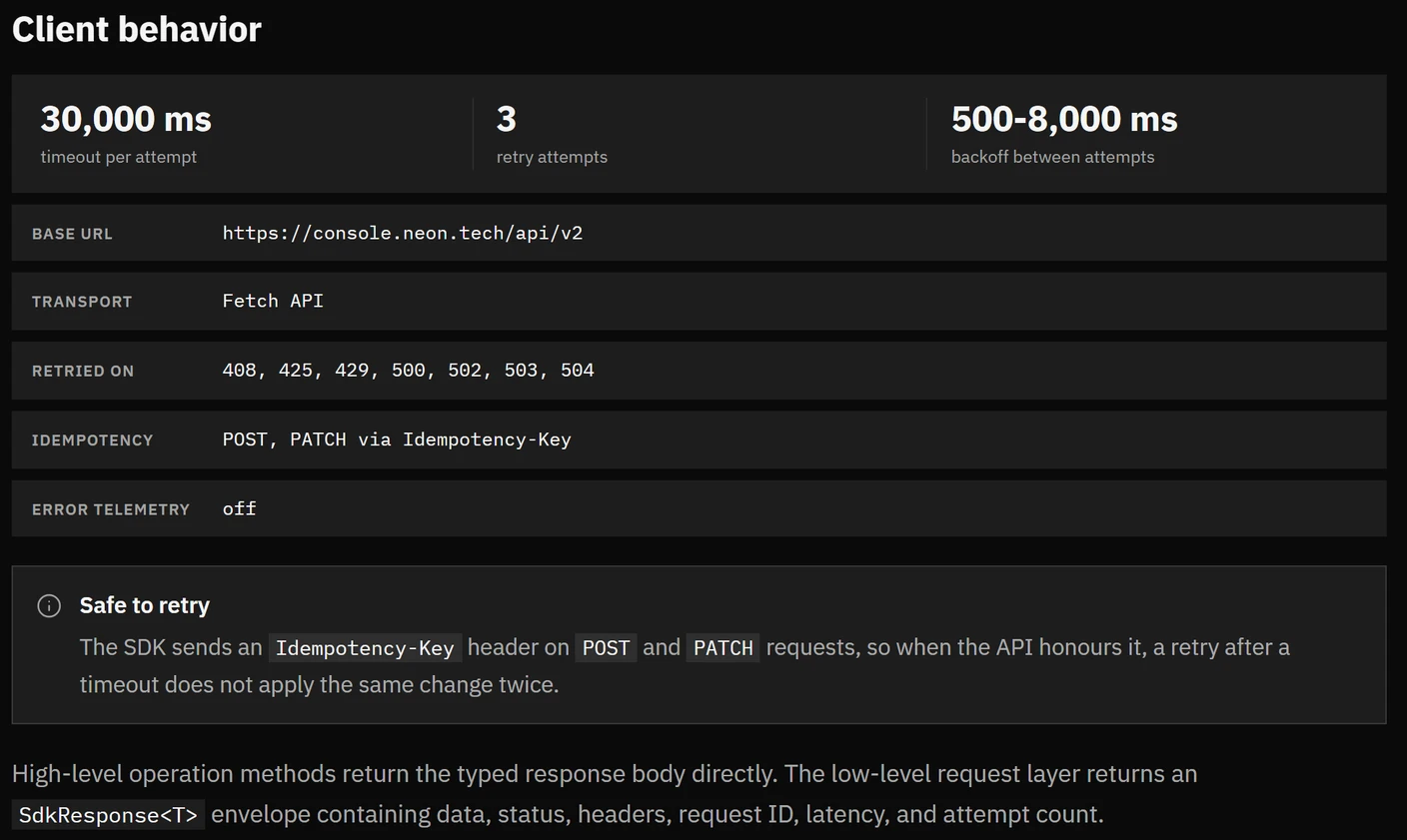
That distinction matters in production. Some SDKs retry transient errors by default, others require an option, and others delegate retrying entirely to the caller. Document the behavior of the package version you ship.
Official, community and generated libraries
An official library has the API provider behind its maintenance promise. A community library may be excellent, and may even lead the official one in a niche language, but its release cadence and support obligations belong to its maintainers. A generated library describes how code is produced, not who supports it; it can be official or community-maintained.
Check issue activity and recent releases, but also ask whether package owners test breaking API changes and publish security updates. An installed dependency becomes part of your application's own reliability story.
What a client library is made of
Under the public methods sits a transport, shared configuration, request builders, response decoders and types. A full library may include pagination iterators, streaming abstractions, file upload helpers and a documented error hierarchy. Its User-Agent often identifies the package and version so the service can observe which clients remain in use.
Keep that layering in mind when debugging. An HTTP 404 might be a valid API answer represented as NotFoundError; a timeout has no HTTP answer at all; a malformed model may be a parsing problem inside the library.
Using a client library well
Construct and reuse the client rather than opening a new transport for every call. Set explicit timeouts, store credentials outside source code, pin a compatible version and log request IDs when errors happen. Test retrying a write only when the service supports idempotency. Prefer typed models and documented methods over reaching into private internals.
When you can skip a client library
Direct HTTP is reasonable for a small script, a diagnostic request or an API with no maintained client in your language. For a long-lived integration with many operations, the repeated request logic often becomes its own informal library anyway. At that point, compare the cost of maintaining your wrapper with adopting an established package.
Client library checklist
Make one successful call, one failure, and one multi-page list. Check timeouts, retry semantics, current runtime support, error types and release history. Try installing the package into an empty project. A client library's usefulness is easiest to judge from a real integration rather than its advertised method count.
Client libraries with Octri
Octri SDK Studio generates client libraries from API descriptions and exposes settings for method organization and client behavior. Those controls help ensure the public interface matches the conventions of each target language rather than copying one universal shape.