By the Octri team · Updated
How to keep SDKs and API docs in sync
A documentation page can be technically accurate about an HTTP endpoint and still be wrong for the package the reader installed. A renamed client option, a method that hasn't shipped yet or a sample copied from an old major version is enough to turn a helpful guide into a build error. Preventing that drift requires treating docs and SDKs as outputs of the same release process.
How do you keep SDKs and API docs in sync?
Give both the API reference and the SDK generator a shared, reviewed contract. Derive examples from the actual client surface where possible, test handwritten snippets against a released version and publish docs only when the package they describe is available. Keep the version relationship visible to users who cannot upgrade immediately.
The goal is not merely identical endpoint lists. It is that a reader can copy an example from the docs today and run it with the package you told them to install.
Where SDKs and API docs drift apart
Drift appears in small places first. A README says AcmeClient while the package now exports Acme. The docs show listAll but the published library still calls it list. Authentication changed to an options object, yet the quickstart still passes a string. A deprecated field is hidden in a sample but remains available in an older client.
Each page has an implicit dependency on a package version. Make it explicit in tests and release metadata rather than trusting authors to notice every change by eye.
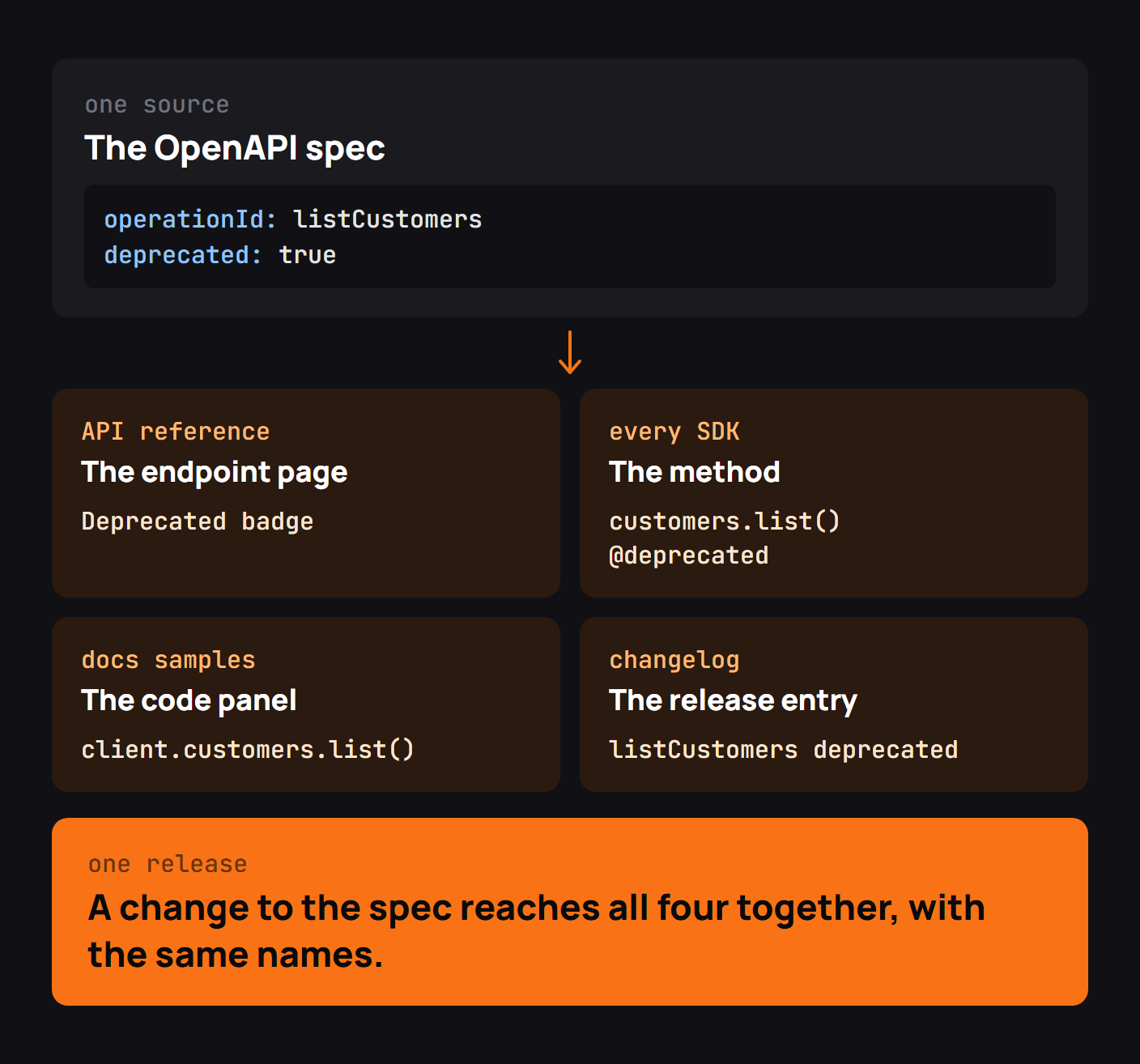
One spec for the reference and the SDKs
An OpenAPI description can supply paths, models, parameters, statuses and operation IDs to both outputs. When a response field changes in the spec, the reference and generated SDK models should change together. This removes one class of mismatch but leaves others: handwritten guides, release timing and behavior not represented in the spec.
Generate code samples from the SDK
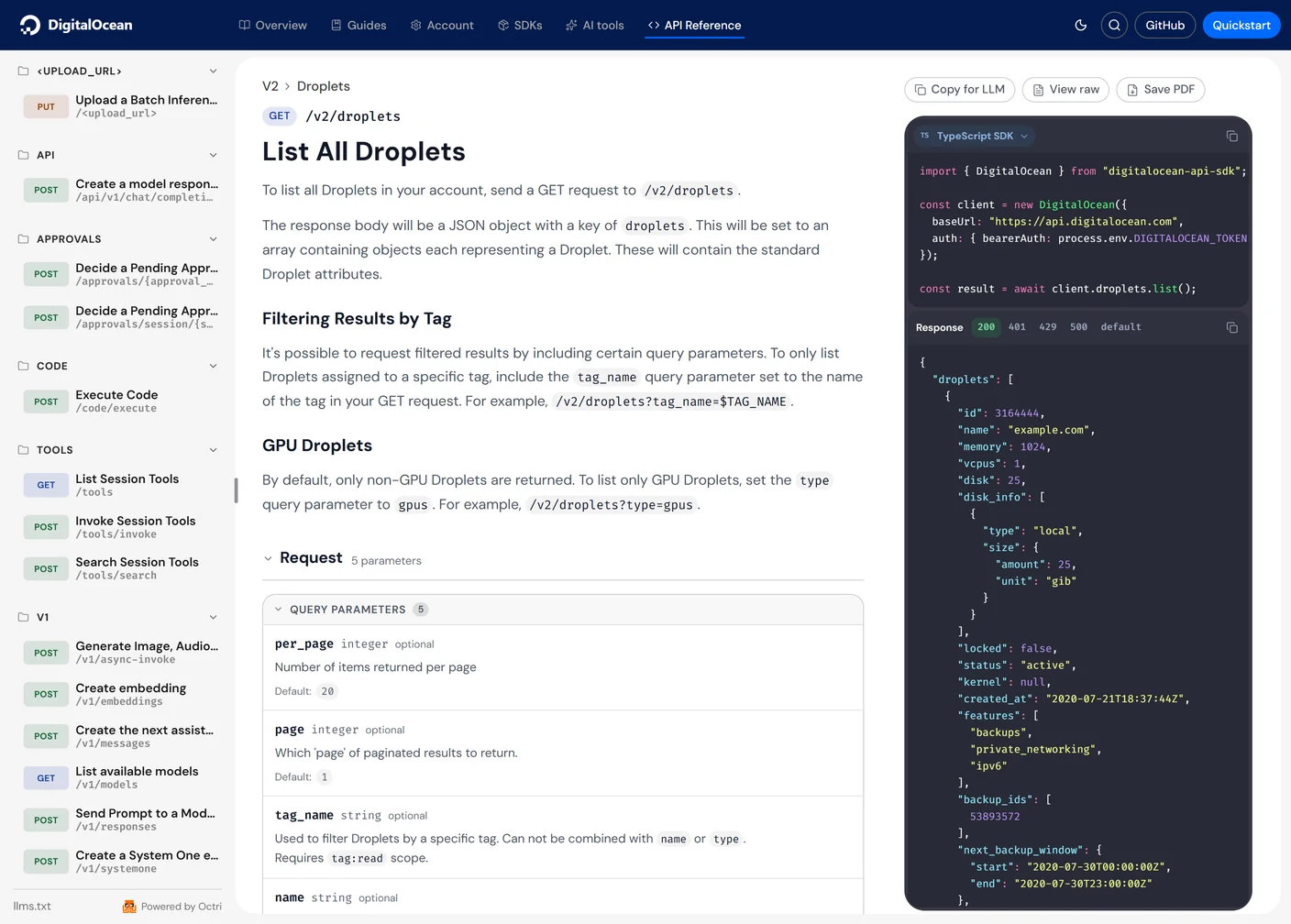
Former Stripe developer-platform leader Kenneth Auchenberg described this problem from inside Stripe. In his April 2024 account, he explained that moving from handwritten libraries to OpenAPI-based code generation gave Stripe SDKs that stayed current alongside code examples in its documentation. That foundation also let the team focus its effort on richer, more framework-specific SDK experiences rather than manually copying common API methods across languages.
The important part of that experience is the connection between the artifacts. If a docs sample comes from the same source and interface rules as the released client, a method rename is less likely to live in two incompatible forms. Generating a sample is not a substitute for running it, but it removes an avoidable source of drift.
Test every sample against the released SDK
In TypeScript, extract fenced samples into a small test project that installs the package version named by the documentation. Run the type checker and a mocked call for examples that need credentials. Python examples can be checked with imports, type checking and sandbox tests.
Also test installation commands. A perfect client.orders.create() example is irrelevant if the package is published under a different npm scope.
Release the SDK with the docs that describe it
Publish the package first, or make both artifacts part of one coordinated release that exposes the docs only after the registry upload succeeds. A documentation deploy that precedes an SDK release creates an interval where the recommended call does not exist.
Keep a simple compatibility table: API revision, TypeScript package range, Python package range and documentation version. People pinned to old majors need to know which reference still applies to them.
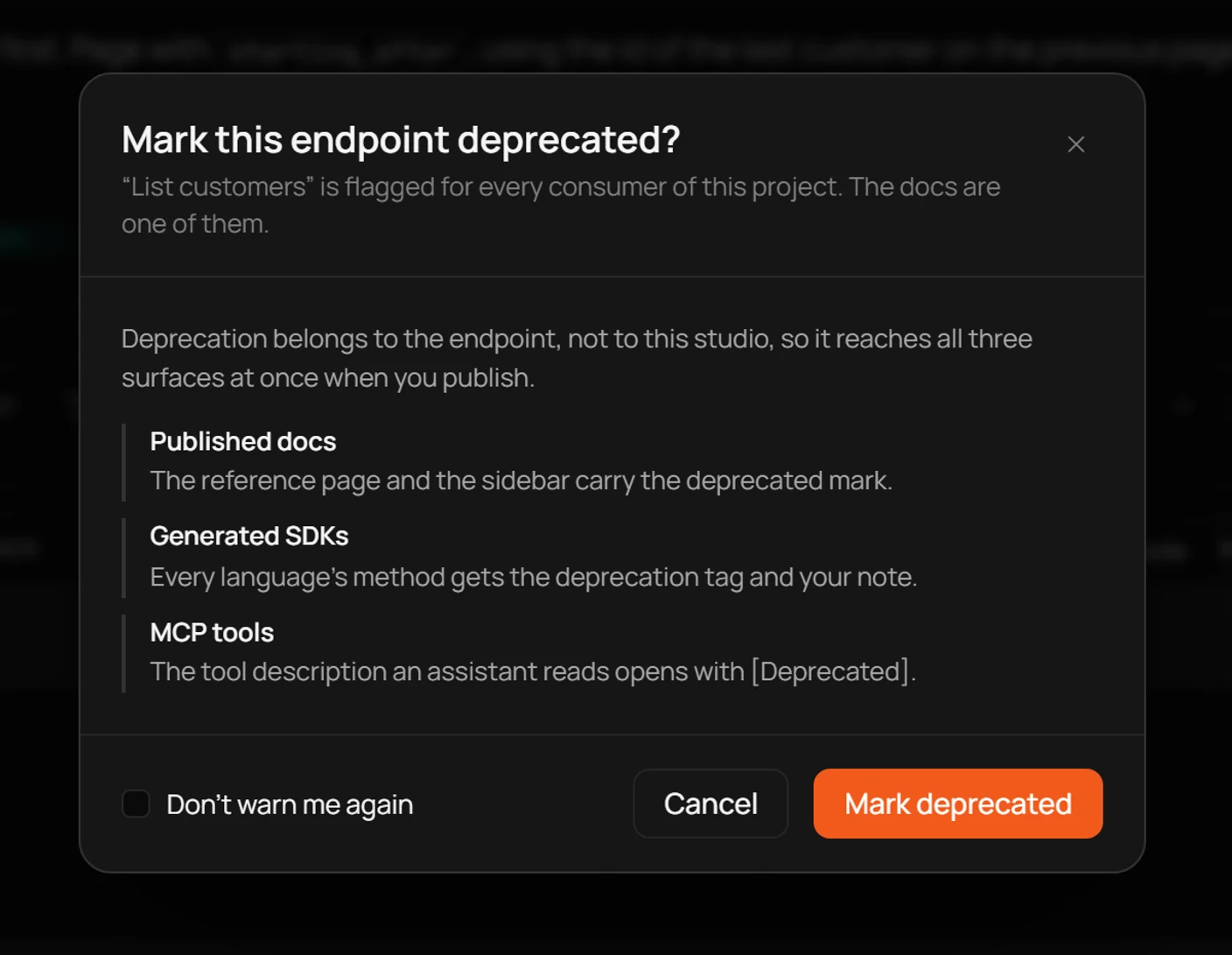
Deprecate in one place
Record deprecations in the API contract or another reviewed source of truth, then carry the notice into method comments, reference pages and the migration guide. Avoid silently removing methods from documentation before users have had a supported path away from them.
Write one changelog for the API and the SDKs
A release note should answer three questions: what changed in the service, which packages contain that change, and what existing integrations must do. Include links to version-specific migration advice and label breaking changes plainly.
Separate release numbers are fine. Separate stories about the same change are much harder to maintain.
Keep each README short
The package README should install, authenticate and complete a first call against the version it describes. Link to the documentation for detailed guides, error policies, pagination and advanced examples. Duplicate long guides in every repository only create more places where old code can survive.
Checklist for keeping SDKs and docs in sync
Change a field in a test OpenAPI spec and follow it through the reference, generated models and snippets. Publish a prerelease package, then run the guide examples against it. Test a deprecation notice in both places. Finally, fail the pipeline when a docs snippet references a method missing from the package it claims to support.
Keeping SDKs and docs in sync with Octri
Octri combines API documentation and SDK generation around the same specification, which can reduce duplicate definitions and make examples easier to align with generated interfaces. The publishing workflow still needs version gates and tests, especially for handwritten explanations and custom code.