The Octri Blog
News, guides & deep-dives
Product updates and practical writing on API documentation, SDKs, and developer experience.
Showing articles tagged #ai-agents.
Engineering3 min read
Can an AI agent actually integrate your API? Build an eval to find out
Give an agent a real task, an isolated sandbox and a result you can verify. Check the records and code the agent produces.
Engineering3 min read
MCP or CLI? Run the same API workflow through both
Compare agent interfaces with the same task, permissions and outcome checks. Token counts mean little when one path does less work.
Engineering3 min read
Your API response is eating the agent's context window
Design bounded responses that preserve useful facts. Filter, select and aggregate before large intermediate payloads enter an agent's context.
Engineering3 min read
One user, 200 API calls: rate limits when agents run in parallel
Coordinate agent fan-out against shared request and concurrency budgets. Queue work before dispatch instead of turning overload into a retry loop.
Engineering3 min read
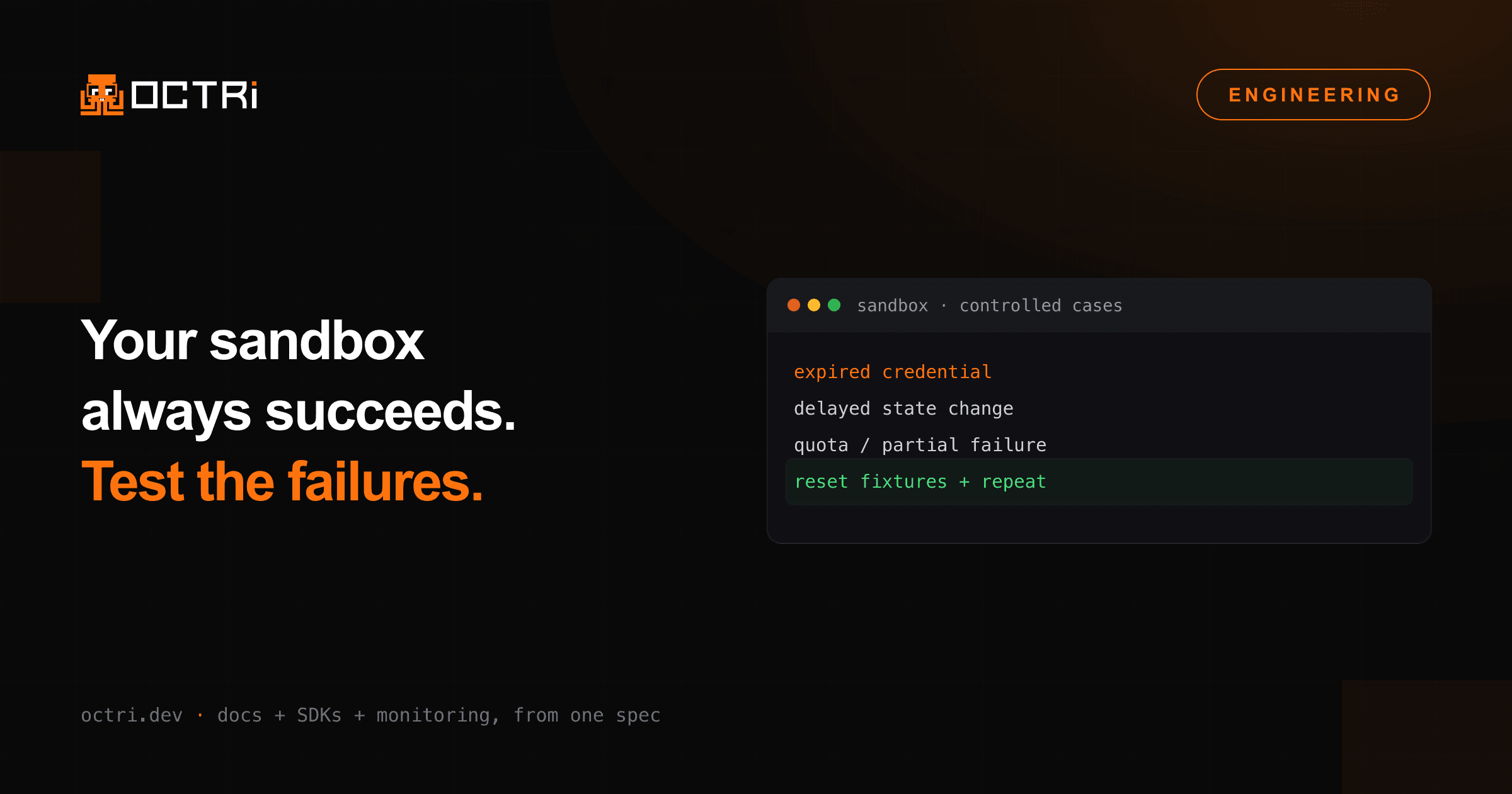
Your sandbox always succeeds. That's why integrations fail in production
Design deterministic failure scenarios alongside happy paths. Give humans and agents a safe place to practice the behaviors production integrations need.
Guides5 min read
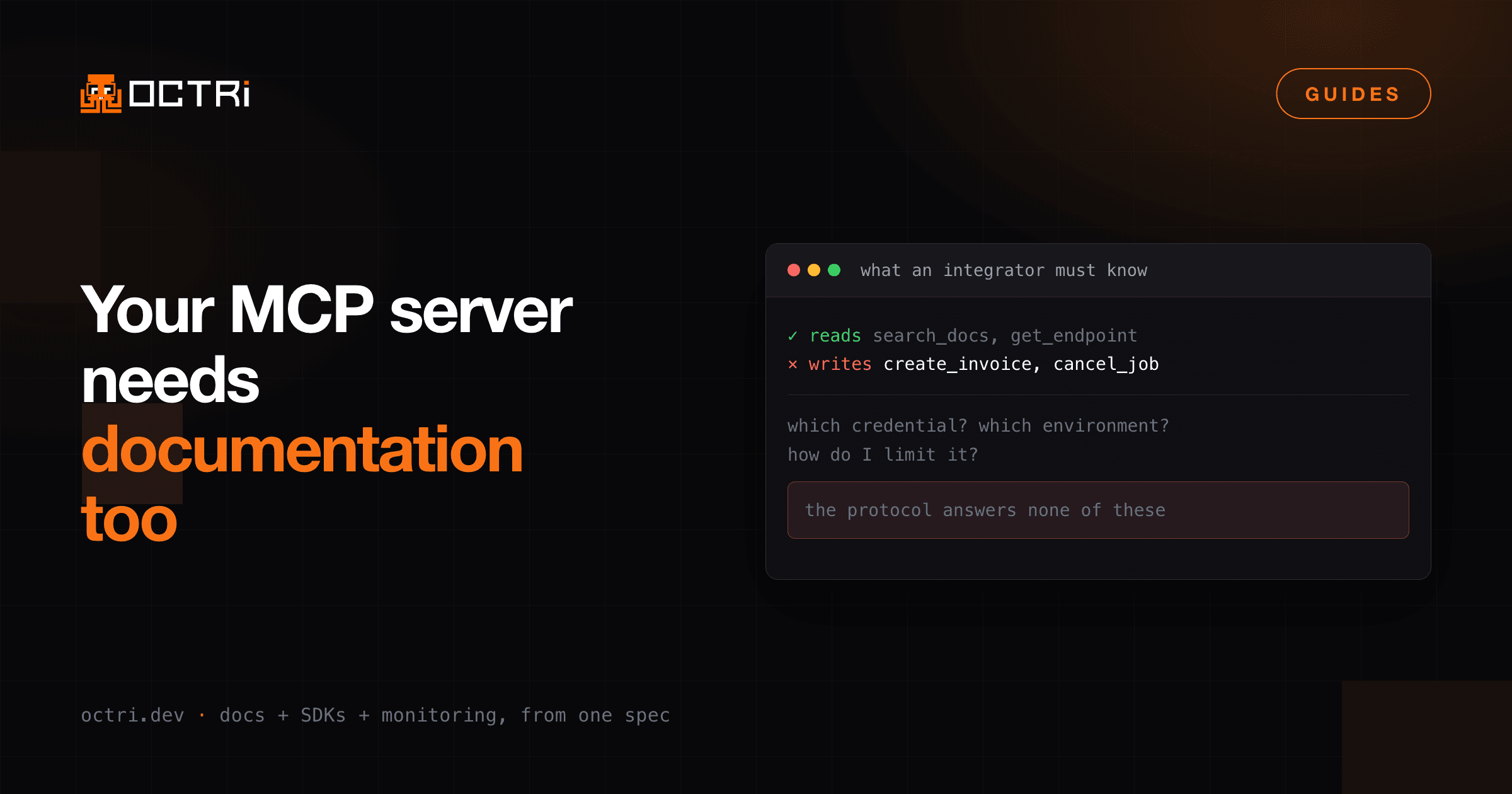
Your MCP server needs documentation, and it is not your API docs
There is no spec format for MCP servers yet, so what an integrator gets is a README and a config snippet. Here is what actually has to be in it.
Engineering5 min read
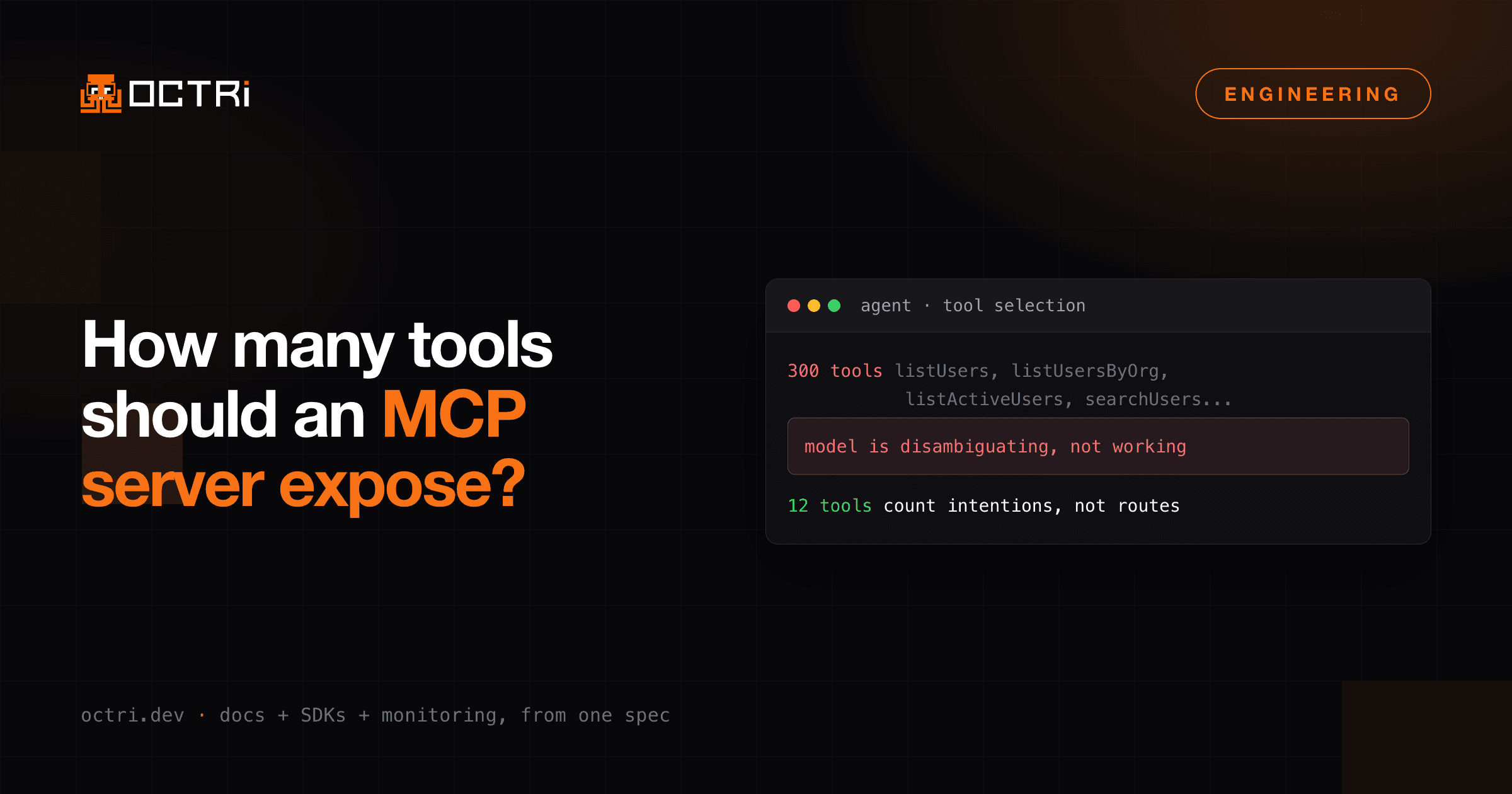
How many tools should an MCP server expose?
Exposing your whole API to an agent makes it worse, not more capable. Tool choice is a selection problem, and every extra option makes the selection harder.
Engineering5 min read
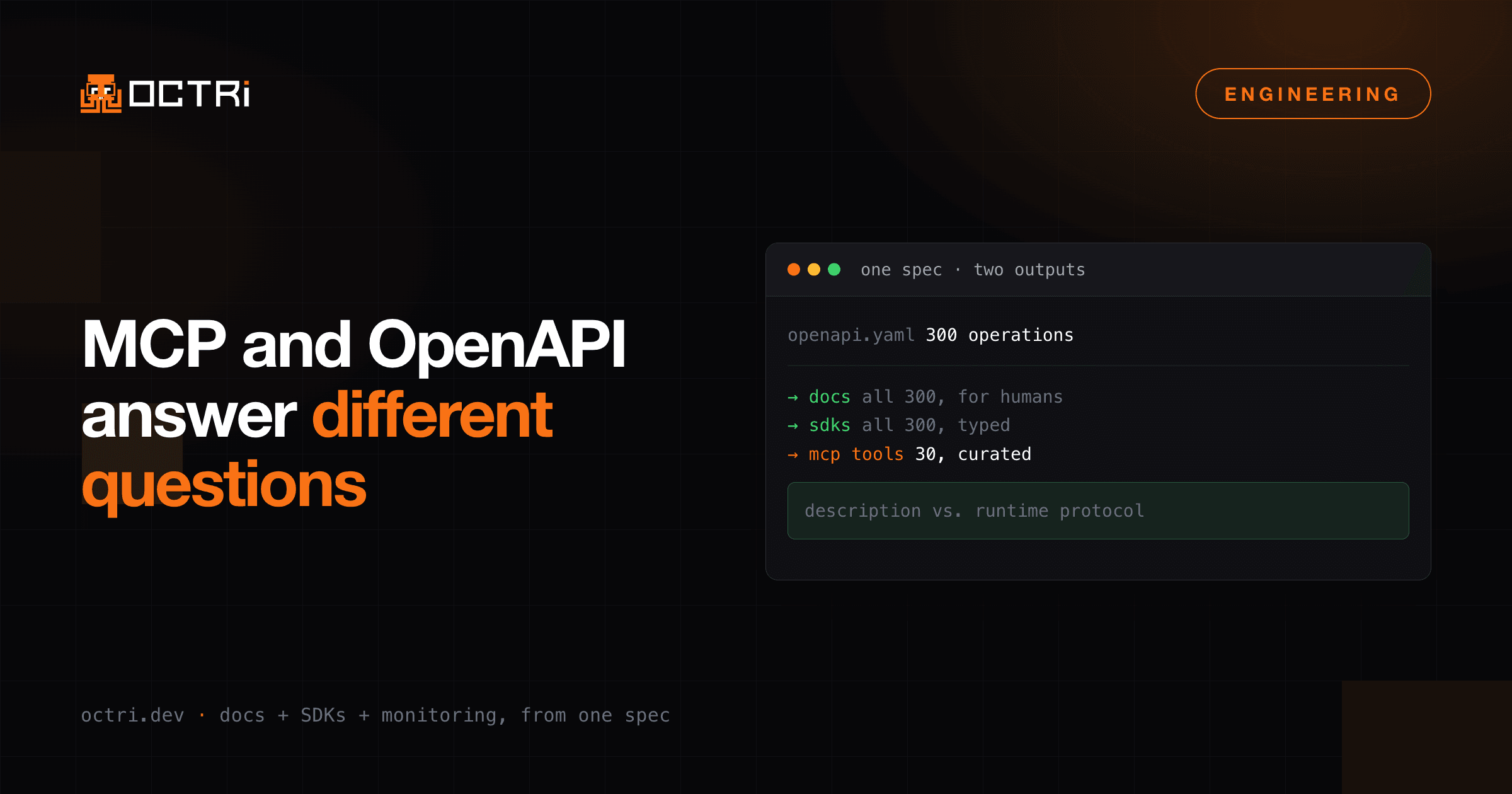
MCP vs OpenAPI: they answer different questions
The comparison is framed as a replacement and it is not one. One describes an API to people and compilers. The other hands a running agent a set of things it may do.
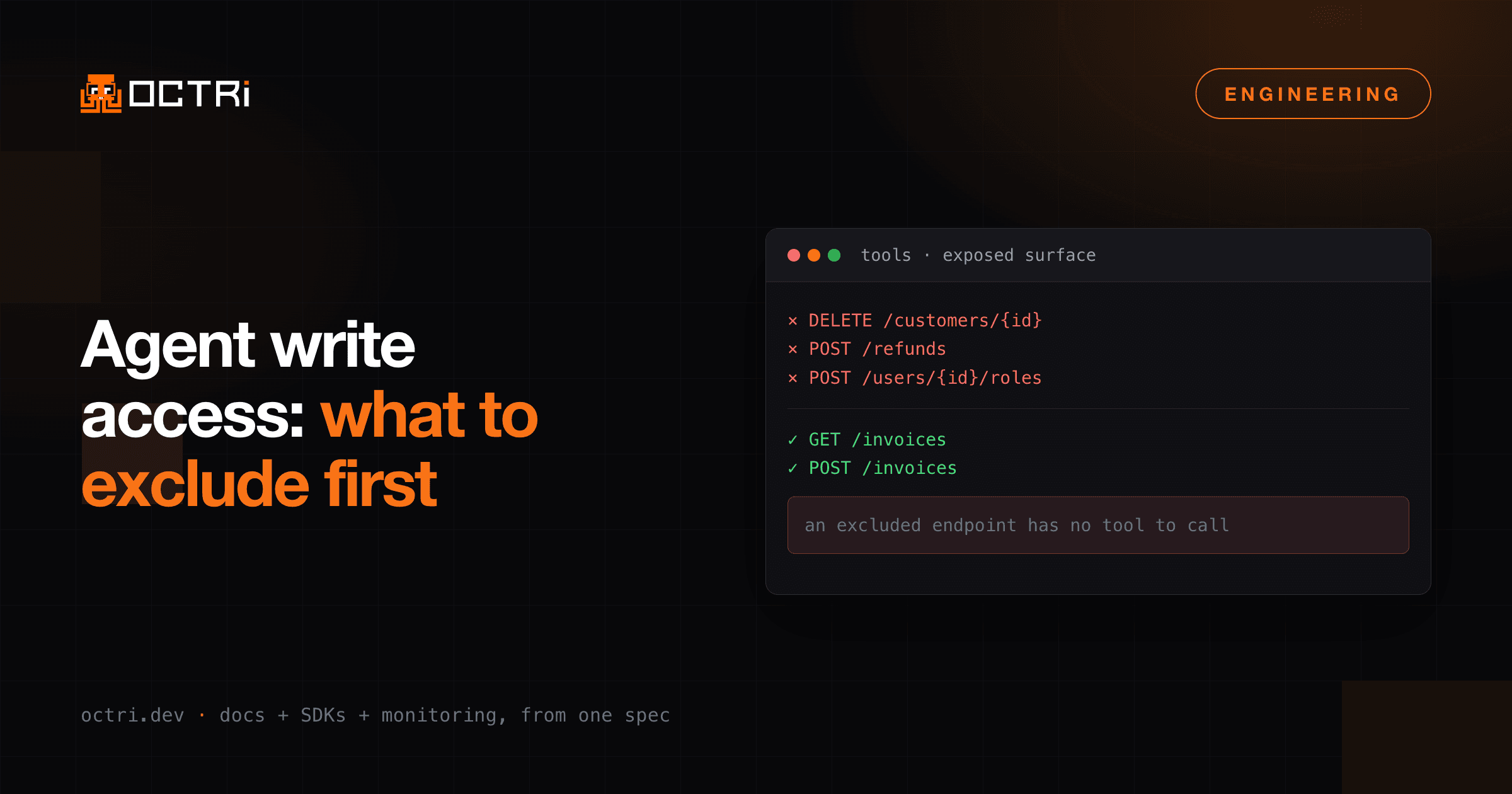
Engineering6 min read
Giving an agent write access to your API: what to exclude first
A tool call is a real request against a real API. Before you connect one, the question is not which endpoints to expose. It is which ones an agent must never reach.
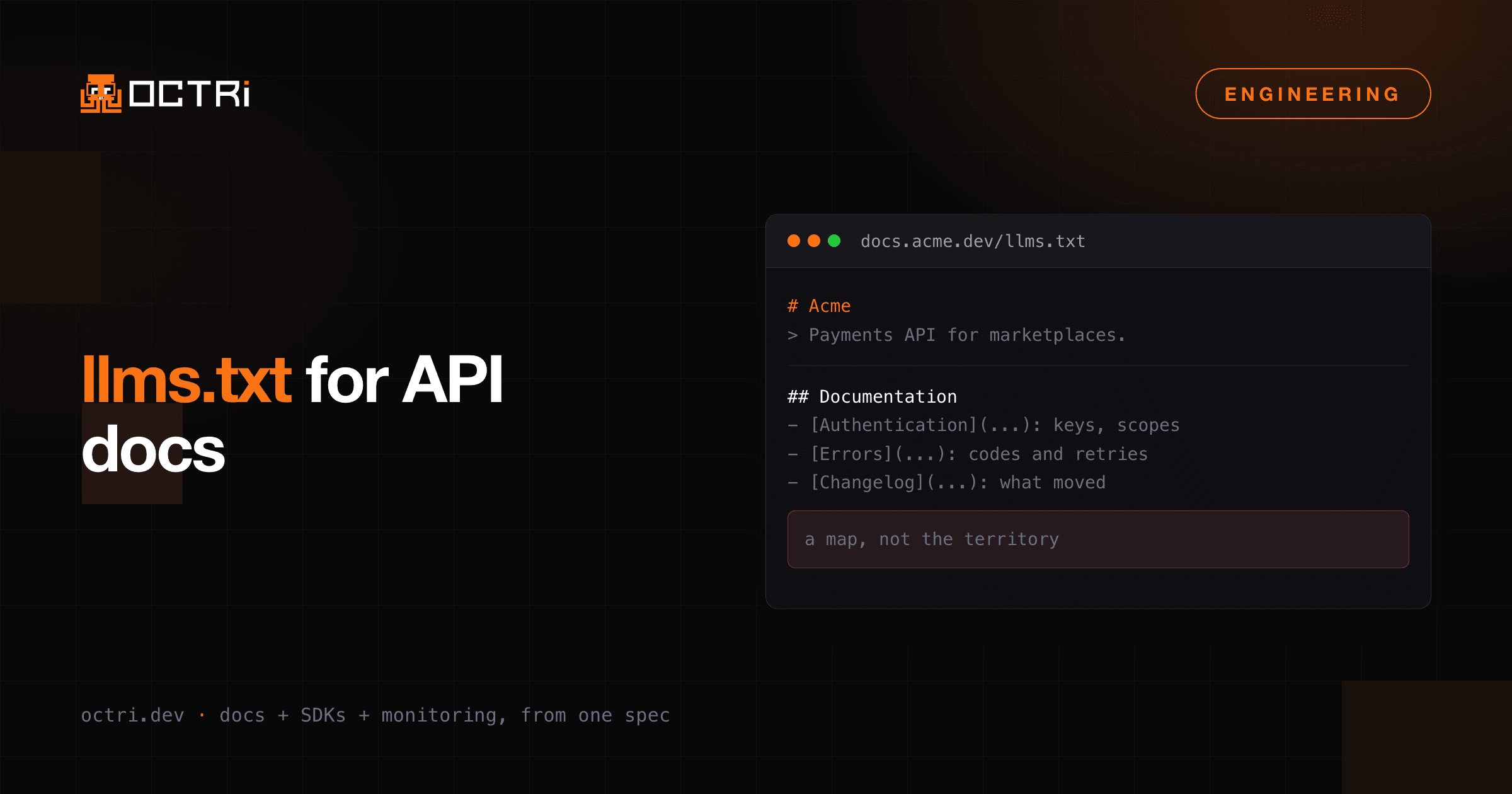
Engineering5 min read
llms.txt for API docs, and what AI crawlers actually read
A file at your docs root that tells a model what your product is and where to look. Cheap to publish, easy to get wrong, and not a substitute for the thing it points at.
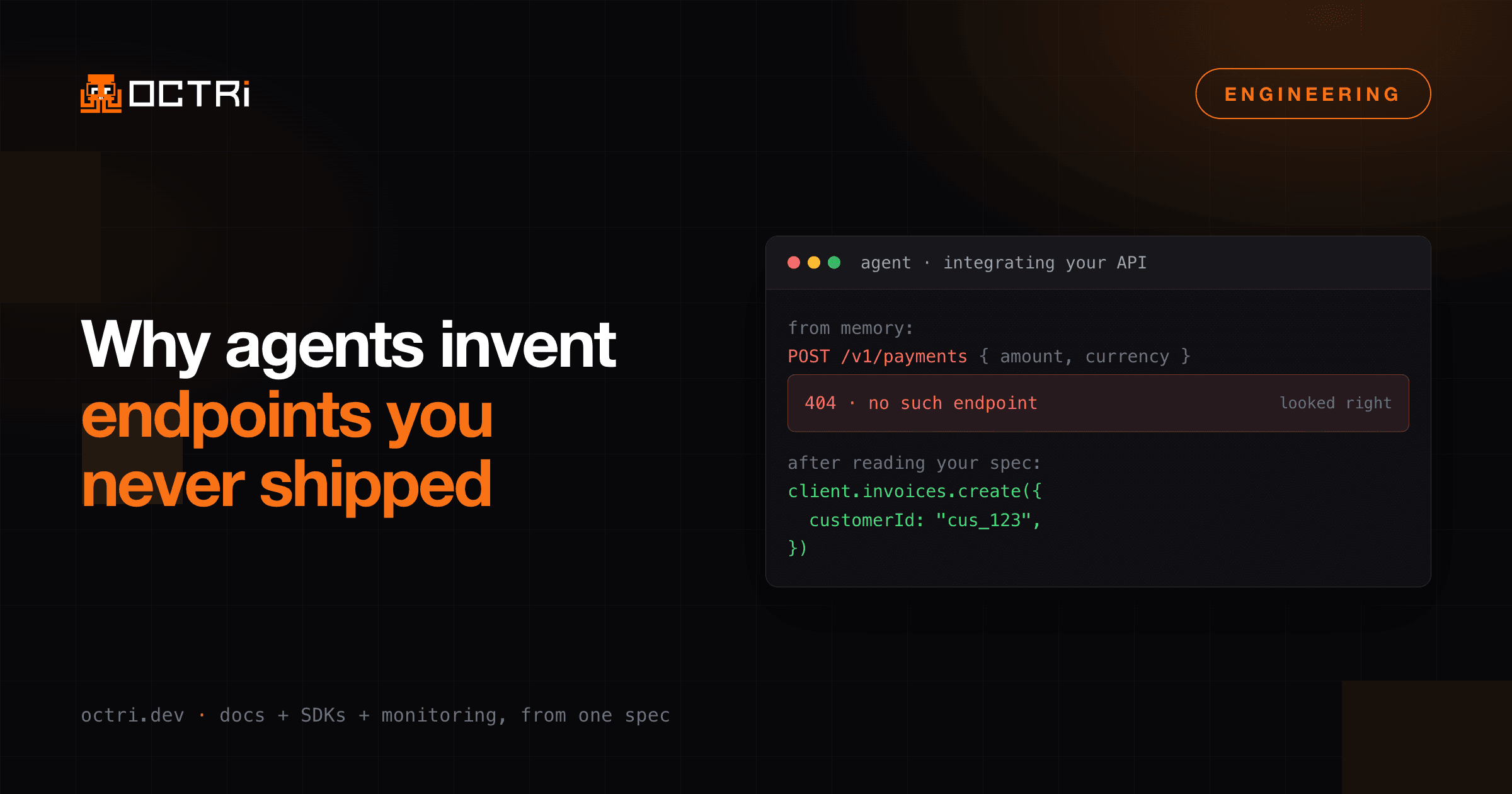
Engineering5 min read
Why coding agents invent endpoints you never shipped
An agent asked to integrate your API will recite one it saw in training or guess from the name. Both produce code that looks right and does not run. The fix is not a better prompt.